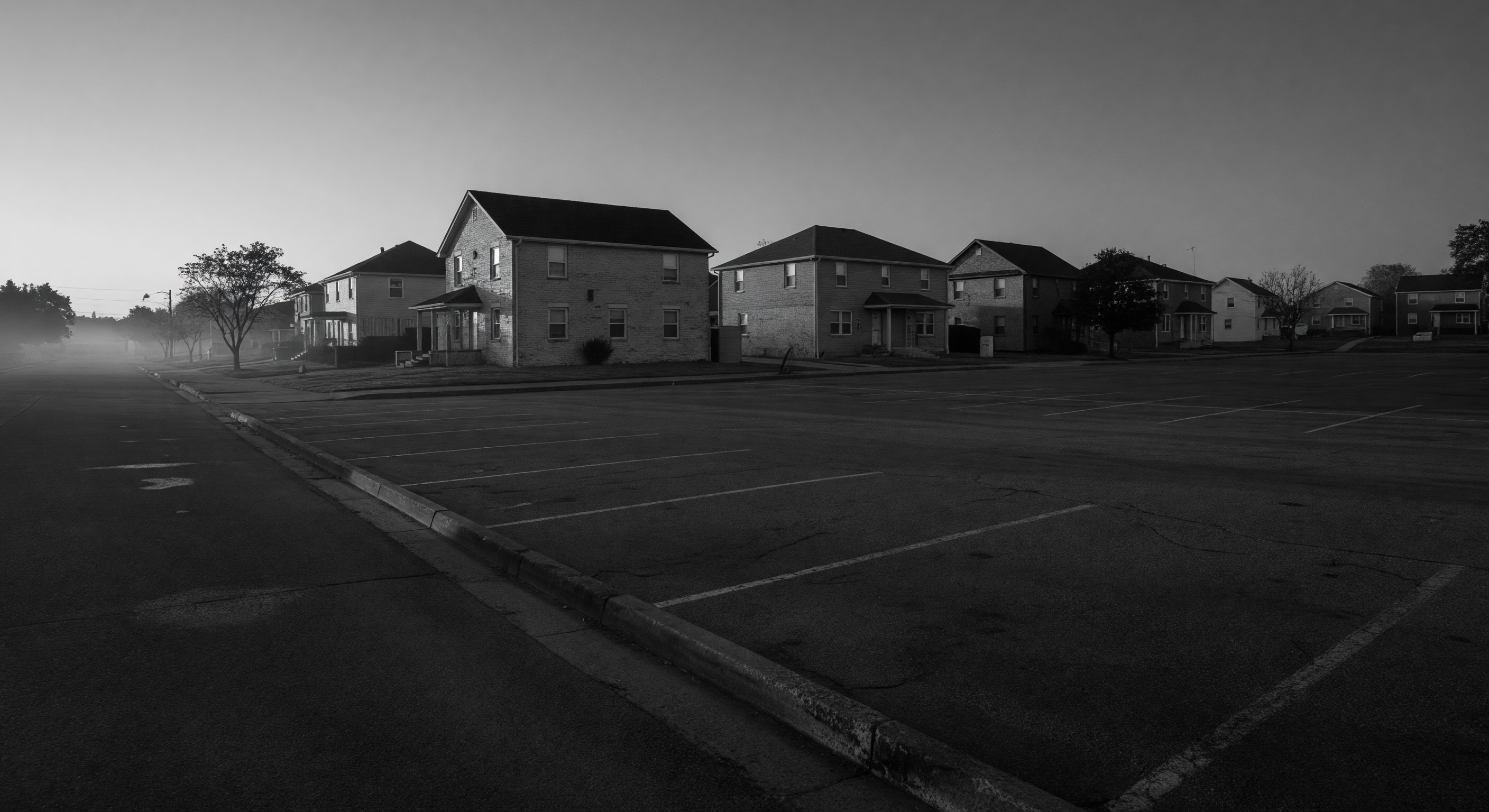
Selecting and installing a parking barrier gate in a residential environment involves a set of acoustic obligations that do not apply to commercial or industrial sites. Residential neighbors sleep. They work from home. They have protected quiet hours under local ordinance, and in many jurisdictions those ordinances carry civil or criminal penalties for violation. This article works through the full compliance chain—from federal baseline frameworks down to the specific installation choices that determine whether a parking barrier gate generates one noise complaint per year or one per week.
Why Residential Parking Gate Noise Generates Complaints
Barrier gates are cyclic machines. In a 200-unit apartment complex with a single entrance, a gate motor may cycle 400 or more times in a 24-hour period. Each cycle produces three distinct noise events: the activation sound when the gate receives a signal, the mechanical travel of the boom arm, and the stop event when the arm reaches its limit position.
In a standalone commercial park or airport surface lot, those three events are masked by ambient traffic, HVAC equipment, and general urban noise floor. In a residential setting—particularly a gated community, a small multifamily lot, or a townhome development—ambient levels can drop to 35–45 dBA at night. At those ambient levels, a gate motor running at 62–68 dBA becomes distinctly audible from inside a bedroom within 50 feet of the entrance.
The complaints that follow are not simply a nuisance management problem. Persistent noise that disrupts sleep or interferes with use of a residence can trigger formal code enforcement proceedings, HOA liability claims, and in multifamily properties subject to federal fair housing regulations, potential accommodation requests from residents with noise-sensitive medical conditions.
Understanding why complaints arise is the first step. The second is building a system—equipment selection, installation method, and documentation—that withstands regulatory scrutiny if complaints escalate.
Measuring Barrier Gate Noise: dBA, Leq, and Time-of-Day Weighting
Noise compliance in residential settings is measured in A-weighted decibels (dBA), a scale that filters the measured sound pressure to approximate how the human auditory system processes frequency. A gate motor that produces a broadband mechanical sound at 65 dB SPL (flat) will typically register in the 58–63 dBA range after A-weighting filters the lower-frequency content.
Three measurement metrics appear most frequently in compliance documentation:
Instantaneous dBA — the peak level at a specific moment. Useful for characterizing the loudest event in a cycle (typically the arm stop-impact). Most ordinances cite this metric.
Leq (equivalent continuous sound level) — the energy-averaged level over a defined period, commonly 1 hour or 15 minutes. Leq measurements smooth out the cyclic nature of gate noise and are used in jurisdictions that regulate integrated exposure rather than peak events.
Ldn (day-night level) — a 24-hour metric that applies a 10 dB penalty to nighttime noise (10 pm to 7 am). The HUD residential noise standard uses Ldn as its primary metric, and many municipal ordinances that govern mixed-use and residential development are calibrated to Ldn thresholds.
For practical compliance measurement, a Class 2 sound level meter positioned at the nearest habitable space (property line, exterior wall of adjacent unit, or bedroom window—whichever is specified in the applicable ordinance) is the standard approach. Measurements should be taken during the quietest ambient period—typically 11 pm to 1 am—when the signal-to-noise ratio most clearly reveals the gate’s contribution to the acoustic environment.
ANSI S12 standards (specifically ANSI S12.9 for the assessment of environmental sound) provide the methodological framework for measurement and reporting. When compliance documentation is required for a permit or a complaint response, referencing the ANSI S12 methodology establishes credibility with the reviewing authority.
EPA and HUD Framework: The Federal Baseline
Two federal frameworks establish the foundational noise policy environment into which state and local ordinances fit.
The EPA Noise Control Act of 1972 (epa.gov) was the first comprehensive federal framework for noise as an environmental pollutant. The Act directed the EPA to establish noise emission standards for products in commerce and to identify levels of environmental noise that protect public health with an adequate margin of safety. The EPA’s 1974 levels document identified outdoor day-night average sound levels of 55 dBA or below as the threshold for protecting public health and welfare in residential areas. This figure is not a directly enforceable limit—it is a guidance level—but it provides the scientific basis for most state and municipal residential noise ordinances.
The HUD Noise Assessment Guidelines, last substantially revised in 2009 and incorporated into site assessment requirements for HUD-assisted housing, define three acceptability zones for residential development:
- Acceptable: Ldn below 65 dBA
- Normally Unacceptable: Ldn 65–75 dBA
- Unacceptable: Ldn above 75 dBA
For parking barrier gate installations at or adjacent to HUD-assisted properties—Section 8 housing, public housing, affordable housing developments with federal financing—these thresholds take on regulatory weight. A gate installation that pushes a property’s combined Ldn above the 65 dBA threshold can affect the property’s compliance status with HUD program requirements.
OSHA’s occupational noise standard (osha.gov) sets a permissible exposure limit of 90 dBA for an 8-hour time-weighted average, with a 5 dB exchange rate. This standard is not directly applicable to residents, but it is relevant for maintenance personnel and gate operators who work in close proximity to equipment. A gate motor running at 80 dBA places workers in the equipment room or adjacent mechanical space in a zone where OSHA documentation and potentially hearing protection requirements apply.
Typical Municipal Noise Ordinance Structure
Federal guidelines set the scientific baseline; municipal ordinances set the enforceable limits. The structure of most residential noise ordinances follows a common pattern.
Zoning-based limits — Residential zones (R-1, R-2, multifamily, etc.) carry specific daytime and nighttime dBA limits measured at the property line or at the nearest habitable space. Daytime limits (typically 7 am to 10 pm) commonly range from 55 to 65 dBA. Nighttime limits (10 pm to 7 am) drop to 45–55 dBA in most jurisdictions. Some jurisdictions add an additional reduction for Sunday mornings or holidays.
Tonal and impulsive penalties — Ordinances that track ANSI S12.9 methodology often apply a 5 dB penalty to noise that contains a tonal component (a pure-tone frequency discernible above the surrounding spectrum) or an impulsive component (sharp transients like the arm-stop impact). A gate motor with worn bearings that generates a tonal whine, or an arm that bottoms out hard against a rubber stop, may trigger these penalties even if the broadband dBA reading is within limits.
Time-of-day weighting — In addition to lower nighttime limits, some municipalities require that noise-generating equipment installed after a specific year meet limits at all hours, not just during the complaint-generating event. This matters for gated communities that operate 24 hours.
Complaint-triggered versus permit-required compliance — Some jurisdictions require noise documentation as a condition of the mechanical permit for the gate installation. Others operate on a complaint-response basis: no permit requirement, but enforcement action if a complaint is filed. Knowing which regime applies before installation determines whether noise measurement reports need to be in hand at permit submission or held in reserve for a potential dispute.
Quiet-Mode Gates and Acoustic Retrofits
The market for low-noise barrier gate operators has developed significantly in response to multifamily and HOA demand. Several product lines from manufacturers including FAAC, LiftMaster (now part of Chamberlain), and BFT offer features specifically designed for noise-sensitive environments.
Key design features to look for:
DC motor operation — DC motors run quieter than AC motors at equivalent torque because their power delivery is continuous rather than pulsed. They also support soft-start and soft-stop profiles.
Soft-start/soft-stop electronic control — Rather than engaging full torque at activation and cutting power abruptly at limit, soft-start/stop controllers ramp speed up at the beginning of the cycle and ramp down before the limit position. This eliminates the sharp mechanical transient at arm stop—the single loudest event in most gate cycles.
Enclosed housing with acoustic lining — Operator enclosures with foam or fiberglass acoustic lining can reduce radiated motor noise by 6–10 dB at one meter. This treatment is most effective for installations in equipment rooms or covered columns where the enclosure can be fully closed.
Arm counterweight systems — Properly counterweighted arms require less motor torque to lift, reducing motor load and associated acoustic output. Counterweighting also slows uncontrolled arm travel if a limit switch fails, reducing impact noise.
Acoustic retrofits for existing installations — For existing gates that are generating complaints, the acoustic retrofit toolkit includes: replacement of worn motor bearings, addition of vibration-isolation mounts between the operator chassis and its concrete pad, replacement of rigid arm-stop hardware with progressive-compliance rubber buffers, and installation of acoustic baffles on the equipment housing. A well-executed retrofit can reduce peak noise output by 8–15 dBA without full equipment replacement.
Installation Choices That Affect Noise
Equipment selection is one variable. Installation method is the other. A low-noise operator installed on a rigid concrete pad bolted directly to a hollow masonry wall will radiate structure-borne vibration throughout the wall assembly. The same operator mounted on vibration-isolating pads, wired with flexible conduit, and set back from the wall by 12 inches will produce substantially less transmitted noise into adjacent spaces.
Foundation and mounting — The operator base should be isolated from the concrete pad using neoprene or rubber vibration-isolating mounts rated for the operator’s weight and operating frequency. This is the single highest-impact installation decision for structure-borne noise control.
Conduit and wiring runs — Rigid conduit connected directly to an operator housing can transmit vibration to walls and ceilings. Use flexible metallic conduit for the last 12–18 inches of connection to the operator, and use non-metallic conduit standoffs to break the direct path between the conduit run and the structure.
Loop detector placement — Inductive loop detectors embedded in asphalt or concrete generate a low-level electromagnetic field that, under specific conditions, can induce current in adjacent conductors and produce audible hum in audio equipment or hearing aids within close range. While rarely a primary noise complaint driver, loop placement near ground-floor residential units or below-grade utility rooms should account for this effect. See our full guide on barrier gate installation site assessment for loop placement methodology.
Equipment room construction — Where the operator is installed in a dedicated equipment room or kiosk, the room itself is an acoustic control element. Masonry construction with sealed penetrations, a solid-core door with threshold seal, and a single layer of 5/8-inch Type X gypsum board on the interior will typically provide 25–30 STC of isolation. This is adequate to reduce a 68 dBA operator to below 40 dBA at the room exterior—compliant with most nighttime residential limits.
Arm travel speed — Many operators support adjustable arm travel speed via the control board. Reducing arm travel speed from 3 seconds to 4.5 or 5 seconds for the full 90-degree arc reduces peak mechanical power and associated noise output. The tradeoff is reduced throughput capacity. For residential applications where traffic flow rates are moderate and queue management is not critical, the slower cycle is generally preferable.
For hotels and mixed-use residential applications where higher throughput coexists with acoustic sensitivity, a different set of tradeoffs applies—see our treatment of barrier gates in hotel and hospitality parking for that context.
Documentation and Compliance Reporting
In jurisdictions where noise compliance documentation is required at permit stage, or where an installation has generated a complaint that has entered the code enforcement process, the documentation package should include:
Pre-installation ambient noise survey — Baseline dBA measurements at the nearest habitable space, taken during the quiet-hour period, establishing the ambient noise floor before the gate is operational. This is the single most important defensive document: it establishes what the noise environment was before the installation and provides the comparison baseline for any post-installation dispute.
Equipment specifications — Manufacturer-published dBA ratings for the operator at one meter, plus any third-party acoustic test data. Ratings published to ISO 11203 or ISO 4871 methodologies are most defensible.
Post-installation compliance measurement — dBA readings taken at the property line or specified measurement point under operating conditions, during the applicable regulatory quiet period. Document ambient conditions (temperature, wind speed, presence of competing noise sources), measurement equipment (model, calibration date), measurement position, and the number of gate cycles measured.
Maintenance schedule — Acoustic performance degrades as equipment ages. A documented preventive maintenance schedule—bearing lubrication, arm-stop buffer inspection, counterweight adjustment—establishes that the installation is managed to maintain its compliance posture over time. The specifics of a noise-compliant maintenance program fit within the broader framework discussed in the general barrier gate safety standards and compliance guidance for residential installations.
When a formal complaint has been filed, engage a licensed acoustical consultant to perform measurements and prepare the compliance report. Self-reported measurements, while useful internally, carry less weight in an enforcement proceeding than a report bearing a professional engineer’s seal.
Further Reading
Noise compliance for residential barrier gate installations sits at the intersection of mechanical equipment selection, construction practice, and regulatory procedure. The EPA and HUD frameworks set the scientific and policy baseline. Municipal ordinances set the enforceable limits. And installation choices—from vibration isolation mounts to arm travel speed to equipment room construction—determine whether the installed system operates within those limits across its full service life.
For projects where noise compliance is a condition of HOA approval, building permit issuance, or tenant lease terms, build the documentation package before installation begins, not after the first complaint arrives. Pre-installation ambient surveys cost far less than a code enforcement proceeding, and the data they produce is irreplaceable once the gate is operational.
Authoritative reference standards for this topic include ANSI S12.9 (quantities and procedures for description of environmental sound), EPA Document 550/9-74-004 (levels of environmental noise requisite to protect public health), and HUD’s Environmental Noise Assessment Guidelines. Local code enforcement agencies are the correct contact for jurisdiction-specific ordinance text and measurement protocols.
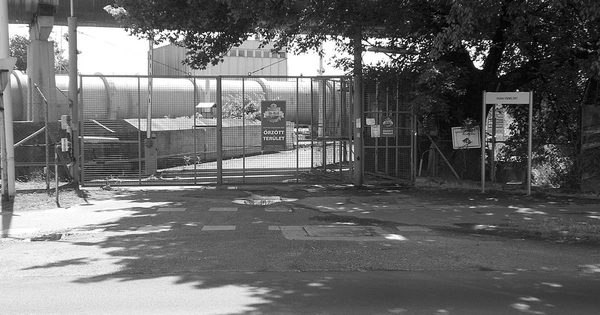
Hero image: “Angelsee-Straße, Schranke, 2024 Enying” by Globetrotter19, CC BY-SA 4.0, via Wikimedia Commons (https://commons.wikimedia.org/wiki/File:Angelsee-Stra%C3%9Fe,_Schranke,_2024_Enying.jpg).
)