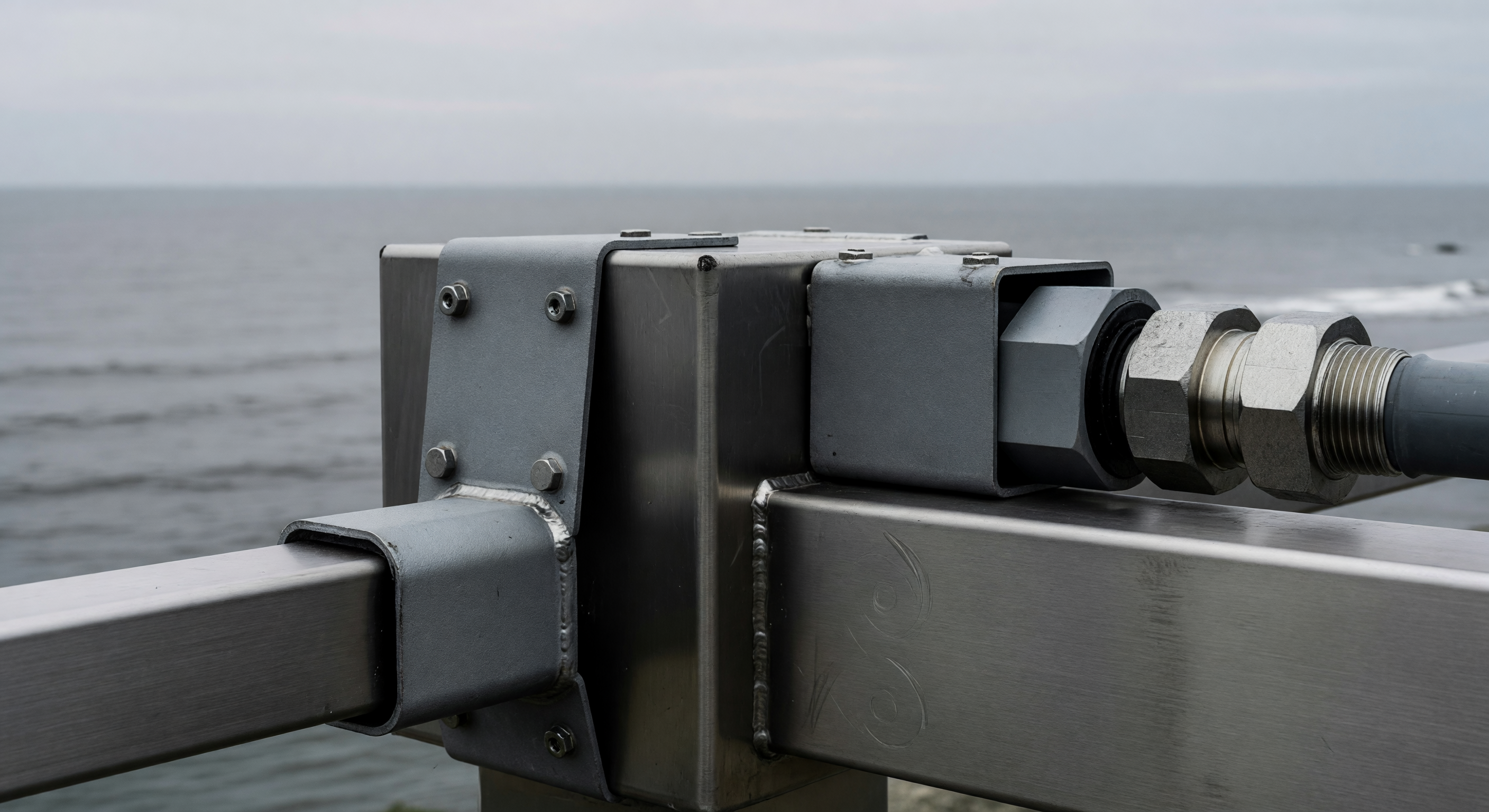
A standard barrier gate specified for a coastal site will show serious corrosion within 18-30 months. The mechanisms are well understood — salt aerosol penetrates cabinet seals, galvanic couples form between dissimilar metals, and chloride ion exposure accelerates carbon-steel oxidation. What separates a gate that lasts 10+ years in a coastal setting from one that fails early is a series of specification choices made at purchase time.
Retrofitting corrosion protection after the fact is almost always more expensive than specifying the right build from the start.
Corrosivity Zones
ISO 9223 classifies atmospheric corrosivity in six categories (C1 through CX) based on chloride deposition, sulfur dioxide, and time of wetness. Category C4 (high) and C5 (very high) cover most coastal and industrial-coastal locations. Category CX covers aggressive marine environments — pier installations, offshore platforms, and direct-ocean-spray exposures.
Inland specifications map to C2 or C3. A gate built to C3 standards installed at a C5 location will corrode at 3-5x the expected rate. Matching the build to the site is the foundational decision.
Practical zone guidance:
- Beyond 10 miles from saltwater: Standard inland spec usually sufficient (C2/C3).
- 1-10 miles: Upgraded coating required (C4).
- Less than 1 mile: Full coastal specification (C5).
- Direct spray zone (within 100 ft of breaking waves, or pier/causeway): Marine specification (CX), often including duplex stainless and specialty coatings.
Enclosure Ratings
Gate housings are rated under NEMA and IEC IP standards. For coastal use:
- NEMA 4X: Corrosion-resistant, watertight, rated for saltwater spray. Minimum for any coastal installation.
- NEMA 6P: Occasional submersion, higher seal integrity. Required for direct-spray or low-elevation sites prone to storm surge.
- IP65/IP66: IEC equivalents of NEMA 4X for dust and water-jet resistance. IP67 adds temporary submersion.
NEMA 4X enclosures are not all equal. Stainless-steel (316L) NEMA 4X cabinets resist chloride pitting; painted mild-steel NEMA 4X cabinets rely entirely on the paint system and fail at any coating breach. Aluminum 5052-H32 is an acceptable middle path but requires careful electrical isolation from stainless fasteners to avoid galvanic corrosion.
UL 50E covers the enclosure standard; specify UL-listed NEMA 4X, not “NEMA 4X equivalent” unrated housings.
Fastener Metallurgy
Fasteners are where most coastal gates fail first. A 316L stainless cabinet held together with 304 stainless bolts will see the bolts pit and seize within a few years. Coastal fastener practice:
- 316L stainless (preferred): Molybdenum content resists chloride pitting.
- Silicon bronze: Excellent marine durability, common in direct-spray applications.
- Hot-dip galvanized to ASTM A153: Acceptable for C4 exposure but eventually fails in C5.
- Zinc-plated or yellow zinc: Not acceptable for coastal exposure at any level.
Anti-seize compound (marine-grade, nickel or copper-based) on every threaded connection is standard practice. Stainless-on-stainless threads galling without anti-seize is a documented problem in coastal installations.
Coating Systems
For the gate body and arm, coating choice matters as much as metallurgy:
- Marine-grade powder coat with epoxy primer: Effective if the substrate is prepared correctly (SSPC-SP 10 near-white blast). Thickness 8-12 mils total. Cost-effective for C4 exposure.
- Duplex coating (hot-dip galvanize + epoxy topcoat): Combines sacrificial zinc protection with barrier coating. Standard for C5 coastal.
- Marine-grade two-part polyurethane over epoxy primer: The specification for direct-spray and pier installations. Requires professional application.
SSPC (Society for Protective Coatings) and NACE (now AMPP, the Association for Materials Protection and Performance) publish coating specifications for marine exposure. Reference SSPC-PA 1, SSPC-PS Guide 22.00, or AMPP coating system guides for detailed specs.
Internal Electronics Protection
Sealing the enclosure is necessary but not sufficient. Air exchange through seals eventually brings chloride-laden moisture inside. Practices:
- Conformal coating on all circuit boards (acrylic or silicone, following IPC-CC-830)
- Sealed relays and contactors rather than open-frame
- Desiccant packs replaced on each PM visit
- Gore vents or pressure-equalization membranes to prevent pressure-driven air exchange while allowing moisture vapor egress
- Heaters with thermostats in cold coastal climates — keeping the cabinet 5-10°F above dew point prevents condensation that dissolves chlorides inside the housing
Inspection and Maintenance Schedule
Coastal gates need more frequent inspection than inland units. Target schedule:
- Monthly: Visual inspection for coating damage, seal integrity, fastener condition.
- Quarterly: Open cabinet, replace desiccant, inspect PCB for signs of corrosion, retorque critical fasteners with fresh anti-seize.
- Annually: Touch up coating at any damage, full cabinet seal replacement as needed, verify drainage paths are clear.
- After major storm: Open inspection within 24-48 hours regardless of regular schedule. Storm surge and wind-driven spray penetrate seals that handle routine exposure.
Cost Premium
Specifying a coastal-rated gate adds roughly 25-50% to the base gate cost. That premium is recovered multiple times over the lifetime of the asset. Replacing a corroded inland-spec gate on a coastal site every 3-4 years costs substantially more than buying the correct spec once and getting 10-15 years of service.
FAQ
How far from the ocean do I need coastal specs?
Within one mile is clear coastal territory requiring full specification. One to ten miles warrants upgraded coatings and NEMA 4X stainless cabinets. Beyond ten miles, standard inland specs usually work unless local wind patterns concentrate salt.
Is NEMA 4X enough for coastal installations?
Yes for the rating, but only if the cabinet material is 316L stainless or marine-rated aluminum. Painted steel NEMA 4X cabinets fail at any coating breach. For direct-spray sites, step up to NEMA 6P.
Why do stainless fasteners seize?
Galling — stainless-on-stainless threads cold-weld under load without lubrication. Use nickel or copper-based anti-seize on every threaded connection. 316L stainless with proper anti-seize runs reliably for years.
How often should coastal gates be serviced?
Quarterly at minimum — more frequently than inland units. Replace desiccant, inspect PCBs, touch up coatings, and verify seals. After hurricanes or nor’easters, open-cabinet inspection within 24-48 hours regardless of schedule.
Hero image: “Boom gates at Kwinana Beach, June 2023 01” by Calistemon, CC BY-SA 4.0, via Wikimedia Commons (https://commons.wikimedia.org/wiki/File:Boom_gates_at_Kwinana_Beach,_June_2023_01.jpg).



)