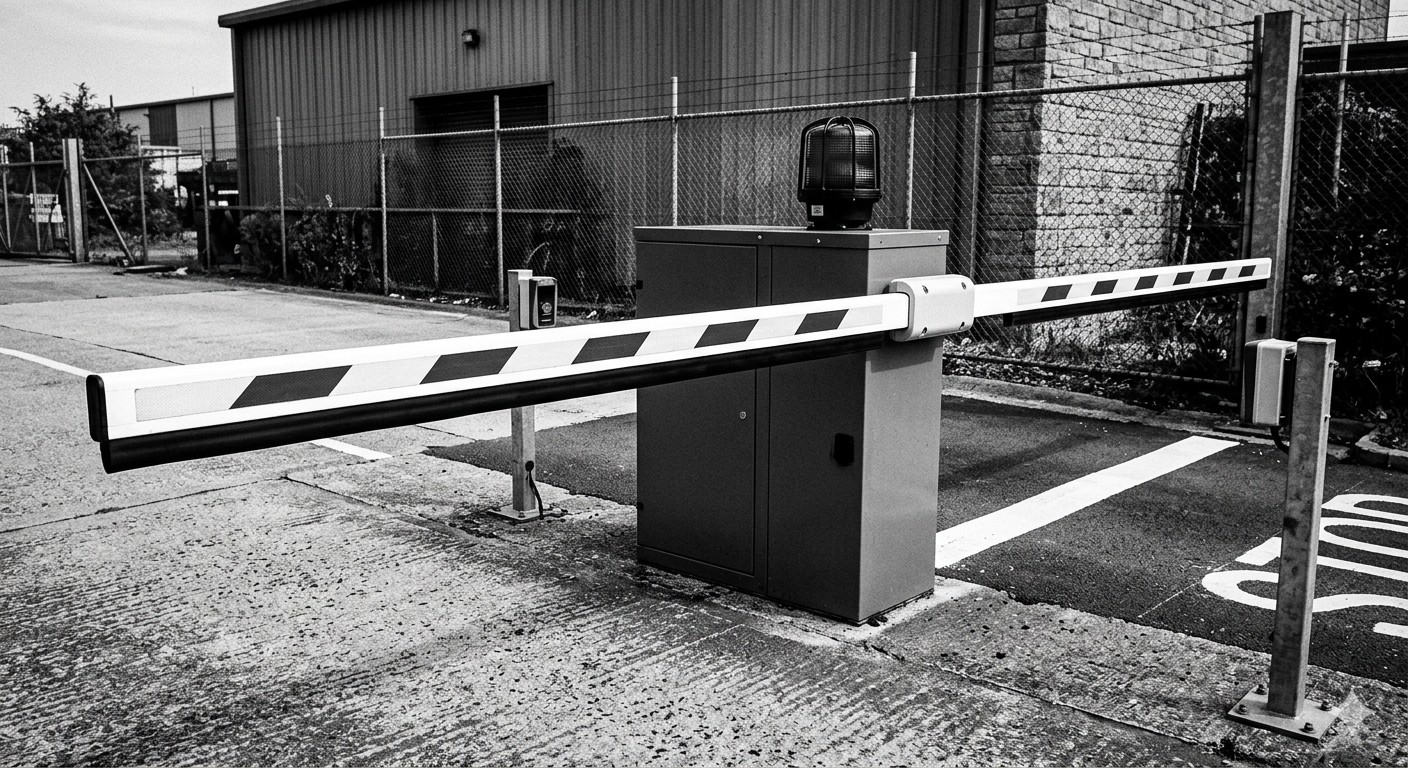
Hotel parking is more than a logistical detail. It is often the first physical interaction a guest has with a property, and it sets the tone for the entire stay. A slow, confusing, or poorly maintained parking experience can undermine even the most beautifully appointed lobby. Barrier gate systems give hotels direct control over access, revenue, and the flow of vehicles through their facilities, and the technology has advanced well beyond the simple arm-and-ticket setups of a decade ago.
This guide covers how barrier gates fit into hospitality parking operations, which technologies pair best with hotel workflows, and what properties of different sizes should prioritize when selecting a system.
Why Hotels Need Dedicated Parking Access Control
Hotels face a parking challenge that most commercial facilities do not: their customer base turns over daily. Unlike an office building with predictable badge holders, a hotel must authenticate hundreds of unique visitors per week, many of whom arrive tired, in unfamiliar vehicles, and with little patience for friction.
Without a controlled access system, hotels commonly encounter these problems:
- Revenue leakage from unauthorized parkers taking guest-reserved spaces
- Valet bottlenecks during peak check-in and checkout windows
- Liability exposure when non-guests use the structure and incidents occur
- Guest complaints about space availability, especially at urban and resort properties
- Inability to offer tiered parking (e.g., standard vs. premium vs. EV charging)
A barrier gate system addresses all of these by creating a managed perimeter. Vehicles enter and exit through defined lanes, and the property decides who gets in, how long they stay, and what they pay.
Barrier Gate Technologies That Work for Hotels
Not every access control technology is a good fit for hospitality. The ideal system minimizes guest friction while giving operations staff full visibility and control. Here is how the major options compare in a hotel context.
Ticket-Based Systems
The traditional approach: a guest pulls a ticket from a dispenser on entry, and feeds it into a pay station or hands it to an attendant on exit. Ticket systems are well understood and relatively inexpensive.
Best for: Budget and mid-tier properties with moderate volume and staffed exits.
Drawbacks: Guests lose tickets. Processing is slow during peak periods. Paper consumables add ongoing cost.
RFID and Proximity Cards
Properties issue RFID cards or key fobs to registered guests at check-in. The card activates the barrier gate without requiring a stop. Monthly parkers (employees, nearby businesses with agreements) can use the same system on a different credential tier.
Best for: Properties that want a touchless guest experience and have a front desk workflow for issuing credentials.
Drawbacks: Requires a process for distributing and collecting cards. Lost cards need deactivation protocols.
License Plate Recognition (LPR)
Cameras read plates on approach and match them against a database. If the plate belongs to a registered guest, the gate opens automatically. LPR eliminates the need for any physical credential.
Best for: High-end and full-service hotels that collect vehicle information at reservation or check-in. Also strong for properties with frequent repeat guests.
Drawbacks: Higher upfront cost. Accuracy can dip with obscured or non-standard plates. Requires integration with the property management system (PMS).
QR Code and Mobile Validation
Guests receive a QR code via email or the hotel app before arrival. They scan the code at a reader mounted near the barrier gate. This approach works well for pre-arrival communication workflows.
Best for: Properties with strong digital communication (booking confirmation emails, mobile apps) and a tech-forward guest demographic.
Drawbacks: Requires guests to have their phone accessible while driving. Not all travelers check pre-arrival emails.
For a deeper comparison of credential technologies, see our breakdown of RFID vs. LPR vs. ticket-based access control.
Matching the System to the Property Type
| Property Type | Recommended Access Method | Typical Lane Count | Key Priority |
|---|---|---|---|
| Urban boutique (under 50 rooms) | QR code or ticket | 1 entry / 1 exit | Compact footprint, low cost |
| Full-service hotel (100-300 rooms) | LPR + RFID hybrid | 2 entry / 2 exit | Guest speed, valet integration |
| Convention hotel (300+ rooms) | LPR with event override | 3+ entry / 3+ exit | Volume throughput, group rates |
| Resort or casino | LPR + mobile + attendant lanes | 4+ lanes, mixed | VIP experience, tiered pricing |
| Extended-stay property | RFID card per guest | 1-2 entry / 1-2 exit | Long-term credential management |
The table above is a starting point. Many properties blend methods, for example, using LPR for pre-registered guests and a ticket lane for walk-in visitors or event attendees.
Integrating Barrier Gates with Hotel Operations
Property Management System (PMS) Integration
The most impactful integration for a hotel barrier gate system is the connection to the PMS. When a reservation is created in systems like Opera, Maestro, or Cloudbeds, the guest’s vehicle information can flow automatically to the parking access control system. The gate recognizes the vehicle on arrival day and opens without intervention.
This integration also enables automated checkout. When a guest checks out, their parking credential is deactivated, and any outstanding parking charges post to the folio.
Valet Management
Barrier gates and valet operations are not mutually exclusive. Many hotels use barrier gates at the perimeter of the parking structure while running valet service at the porte-cochere. The valet team uses a master credential or attendant override to move vehicles through gated areas.
Some systems provide valet-specific features: vehicle tracking by bay number, timestamped entry and exit logs, and integration with valet apps that let guests request their car from their room.
Revenue Control and Tiered Pricing
Hotels that charge for parking can use barrier gate systems to enforce rate structures:
- Complimentary guest parking validated automatically through PMS integration
- Discounted event parking with pre-sold QR codes or validation stamps
- Premium self-park rates for non-guests using the facility
- Monthly permits for nearby office tenants or long-term guests
A pay-on-foot station or automated payment kiosk near the elevator lobby lets transient parkers settle before returning to their vehicle, reducing exit lane congestion.
Vendor Landscape for Hospitality Barrier Gates
Several manufacturers produce barrier gate hardware suitable for hotel applications. The choice often depends on regional availability, service network, and integration ecosystem.
- CAME offers a range of barrier arms with hospitality-oriented access readers and has a broad dealer network across North America and Europe.
- FAAC is well established in commercial and institutional installations, with durable barrier mechanisms suited to high-cycle hotel environments.
- Magnetic Autocontrol produces high-speed barrier gates that are common at airports and large-scale parking operations, including convention hotels with heavy traffic.
- Nice/HiSpeed provides barrier systems with integrated LED lighting and aesthetic options that appeal to properties where the gate itself is visible to arriving guests.
- Parking BOXX manufactures hotel-specific parking systems that bundle barrier gates with pay stations and cloud-based management software, designed for properties that want a single-vendor solution.
When evaluating vendors, ask about:
- PMS integration track record — has the vendor connected to your specific PMS before?
- Service response time — a broken gate at a hotel is a guest experience emergency, not a maintenance ticket
- Aesthetic options — gate housing, arm design, and signage matter at guest-facing properties
- Scalability — can the system handle seasonal volume swings or a future expansion?
Guest Experience Considerations
The best parking technology in the world fails if it frustrates guests. Hotels should evaluate barrier gate systems through the lens of the arriving traveler.
Speed of Entry
Guests arriving after a long flight do not want to wait. High-speed barrier arms (opening in under one second) paired with LPR or proximity readers can process vehicles almost without stopping. Manufacturers like Magnetic Autocontrol and Nice/HiSpeed offer arms rated for sub-second operation.
Signage and Wayfinding
A barrier gate lane should have clear signage indicating which lane to use (registered guest, valet, visitor) and what credential is required. Digital signage that updates in real time based on occupancy or event status adds another layer of professionalism.
Failure Modes
Gates will occasionally malfunction. Hotels need a plan for when they do. Options include:
- Automatic open on power loss (fail-open) to prevent trapping vehicles
- Intercom at every lane connected to the front desk or security
- Manual release accessible to valet and security staff
- Cloud-based monitoring that alerts management to gate faults in real time
ADA and Accessibility
Barrier gate lanes must accommodate vehicles with wheelchair-accessible modifications. Reader heights, lane widths, and intercom placement all need to comply with ADA requirements. The American Hotel & Lodging Association (AHLA) publishes accessibility guidance that extends to parking facilities.
Security and Liability
Controlled parking access reduces a hotel’s liability exposure. A gated facility creates a documented record of every vehicle entry and exit, which is valuable for:
- Incident investigation — timestamps and images help resolve disputes or theft claims
- Insurance documentation — some insurers offer reduced premiums for gated parking
- Unauthorized vehicle deterrence — barrier gates eliminate casual trespassers
The International Parking & Mobility Institute (IPMI) maintains resources on parking security best practices that apply directly to hospitality facilities. Industry publications like Parking Professional also cover emerging security trends in managed parking environments.
Cost Planning for Hotel Barrier Gate Projects
Hotel barrier gate projects vary widely in scope. A small boutique property adding a single entry and exit lane will spend far less than a convention center hotel retrofitting a 2,000-space garage.
| Cost Component | Typical Range |
|---|---|
| Barrier gate mechanism (per lane) | $3,000 - $8,000 |
| Access reader/credential system (per lane) | $1,500 - $5,000 |
| LPR camera system (per lane) | $4,000 - $12,000 |
| Pay station / kiosk | $8,000 - $25,000 |
| PMS integration (software + configuration) | $2,000 - $10,000 |
| Installation and electrical | $5,000 - $20,000 |
| Cloud management software (annual) | $1,200 - $6,000 |
These figures are approximate and vary by region, vendor, and project complexity. For a broader look at pricing across all facility types, see our barrier gate systems buyer’s guide.
Hotels should also factor in revenue recovery. Properties that previously offered free parking as a default may find that a gated system with tiered pricing generates enough new revenue to cover the installation cost within 12 to 24 months.
Emerging Trends in Hospitality Parking
Several developments are reshaping how hotels approach parking access:
- Mobile-first access — more properties are eliminating physical credentials entirely, relying on app-based or SMS-delivered access codes
- EV charging integration — barrier gates combined with EV charging management let hotels offer premium parking tiers that include charging
- Dynamic pricing — event-driven rate changes applied automatically through the parking management system
- Sustainability reporting — occupancy data from barrier gate systems feeds ESG reporting on facility utilization
The IPMI has been tracking the shift toward technology-driven parking in its annual industry reports, and hospitality properties are among the fastest adopters.
Key Takeaways
- Hotel parking is a guest experience touchpoint, not just a facility management task. Barrier gates give properties control over access, revenue, and security.
- LPR and mobile-based access are the leading technologies for hotels that want frictionless guest entry. RFID and ticket systems remain viable for smaller or budget-conscious properties.
- PMS integration is the single most important software connection for a hotel barrier gate system. It automates credential management and parking charge posting.
- Evaluate vendors on service response time and PMS integration experience, not just hardware price.
- A gated parking system often pays for itself through recovered revenue, reduced liability, and improved guest satisfaction scores.