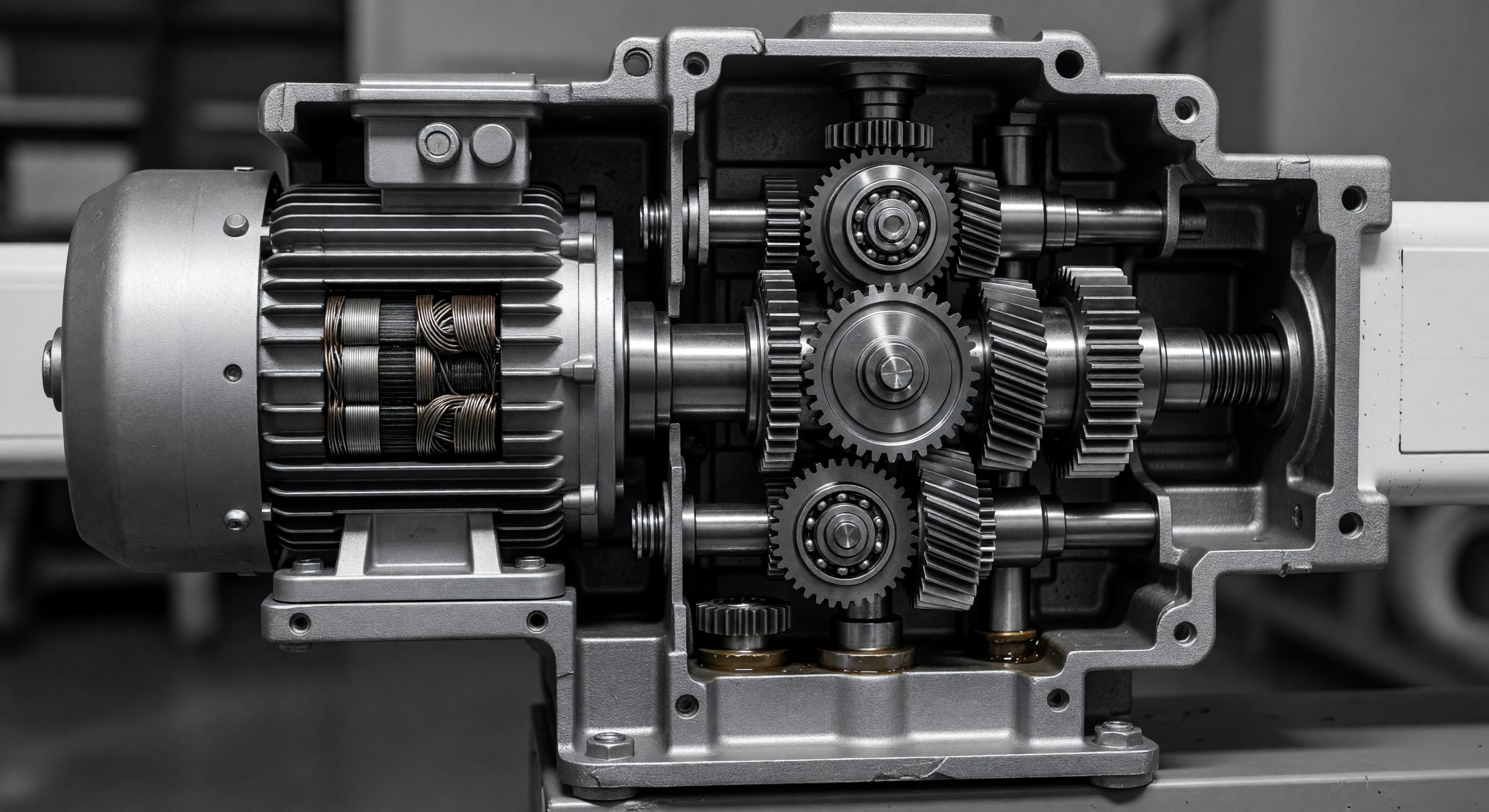
Every parking barrier gate is, at its core, a motor problem. The arm swings, the vehicle passes, the arm returns — and that cycle repeats hundreds or thousands of times per day, year after year, in temperature extremes, rain, and vibration. The motor type chosen for that mechanism determines duty cycle limits, heat accumulation, noise output, and the total cost of ownership over the asset’s service life.
Three motor technologies dominate the commercial parking barrier gate market: AC induction, DC brushed, and brushless DC (BLDC). Each carries a distinct set of trade-offs. Understanding those trade-offs is the core competency of anyone specifying a parking barrier gate for a high-throughput facility.
AC Induction Motors: Still the Workhorse
AC induction motors have powered industrial automation since the late nineteenth century. In the parking barrier gate context, they remain common in facilities with direct mains supply and moderate cycle volumes — typically under 200 cycles per day.
Operating principle. An AC induction motor generates torque through electromagnetic induction between a rotating stator field and a short-circuited rotor. No brushes, no commutator, no permanent magnets. Fewer wear surfaces means fewer failure modes under normal conditions.
Voltage and wiring. Single-phase 120V motors are common in North American surface lots; 230V single-phase and 240V three-phase are standard in European installations and heavier-duty North American applications. The NEMA MG 1 standard governs motor performance classifications and defines acceptable voltage variation tolerances for induction motors in this class.
Speed control. Standard AC induction motors are fixed-speed without an external variable-frequency drive (VFD). The gate arm must rely on mechanical braking or cam-based deceleration for smooth stop behavior. Adding a VFD improves arm profiles but increases cost and enclosure volume.
Thermal behavior. AC motors run warm. In high-cycle environments, thermal cutouts engage to prevent winding damage; recovery time before gate operation resumes is typically 5 to 15 minutes. Manufacturers such as CAME and FAAC have offered AC induction variants for decades, targeting applications where procurement cost and parts availability outweigh cycle-count performance.
DC Brushed Motors: Why They Persist
DC brushed motors remain in active production for gate applications because they are inexpensive, well-understood, and support simple speed control via pulse-width modulation (PWM) without a separate drive controller.
Operating principle. A brushed DC motor uses a commutator — a segmented copper ring — and carbon brushes that maintain sliding electrical contact to switch rotor winding current. The brushes make the motor cheap to control but introduce a finite wear component that defines its maintenance schedule.
Speed control. A microcontroller can vary PWM duty cycle to produce precise acceleration and deceleration ramps without ancillary hardware — a key reason brushed DC motors remain attractive in entry-level and mid-tier gate platforms.
Brush wear. In a gate cycling 500 times per day, brush replacement intervals fall between 18 months and three years. Labor costs for scheduled replacement and unplanned downtime from missed intervals accumulate materially over a 10-year period.
EMI. Brush-to-commutator arcing generates electromagnetic interference that can affect loop detectors, RFID readers, or LPR camera electronics. Suppression filtering to meet FCC Part 15 or CE emission limits is required in gate controller design. See IEEE Xplore for peer-reviewed research on EMI mitigation in brushed motor drive circuits.
Magnetic AutoControl’s earlier product generations shipped with DC brushed drives; the technology persists where cycle count does not justify the BLDC cost premium.
Brushless DC (BLDC): Why Premium Gates Use Them
Brushless DC motors replace the mechanical commutator with electronic commutation — a Hall-effect sensor array or back-EMF zero-crossing scheme signals a gate drive controller to switch phase currents at the correct rotor position. The result is a motor with no contact wear surfaces, higher efficiency, lower heat generation, and substantially higher continuous duty potential.
Operating principle. The BLDC motor inverts the conventional DC layout: permanent magnets on the rotor, electromagnets on the stator. With no brushes generating friction or arcing, life-limiting factors shift to bearing wear and winding insulation degradation — both responsive to predictive maintenance rather than scheduled parts replacement.
Efficiency. BLDC motors achieve 85–93% efficiency at rated load versus 70–80% for comparable brushed DC motors. At 800 cycles per day, the compounding energy savings over 10 years are measurable, though magnitude depends on gate arm mass and local power rates.
Cycle headroom. Lower heat per cycle and the absence of brush arcing allow BLDC motors to sustain 3,000–5,000 cycles per day — the range required at airport entry lanes, transit facilities, and high-density urban structures. Cycle rating methodology is detailed in the next section.
Controller complexity. The trade-off is controller hardware: a BLDC gate drive requires position sensing, a three-phase inverter, and commutation firmware. Controller failure is the more common repair event in BLDC systems; stocking a spare board is standard practice in high-criticality installations. FAAC’s T-series and comparable premium gates use integrated BLDC drives with onboard diagnostics.
Cycle Rating by Motor Type
Cycle rating defines the maximum number of complete open-close sequences a gate can execute in a 24-hour period without exceeding thermal or mechanical design limits. Ratings are not standardized across manufacturers; comparison requires reading the specification sheet at identical duty cycle percentages.
| Motor Type | Typical Daily Cycle Rating | Typical Duty Cycle |
|---|---|---|
| AC Induction | 100–300 | 30–40% |
| DC Brushed | 200–600 | 40–60% |
| Brushless DC | 1,000–5,000 | 80–100% |
The duty cycle percentage (open time as a fraction of total time) is the more precise metric. A gate operating at 80 percent duty cycle — arm up more than it is down — must dissipate heat continuously. Only BLDC motors are reliably rated for continuous-duty operation in high-throughput applications.
For DASMA-compliant barrier gate systems in commercial applications, cycle rating documentation from the manufacturer should be requested as part of the procurement specification. DASMA Technical Data Sheets provide baseline performance criteria used in the door and access control industry that are informative for barrier gate evaluation as well.
Heat Management and Duty Cycle
All three motor types generate heat proportional to resistive losses (I²R losses in windings) and, in brushed motors, additional frictional heat from brush-commutator contact. Managing that heat is the central engineering challenge in high-cycle gate installations.
Thermal classes. NEMA and IEC define winding insulation by class — A (105°C), B (130°C), F (155°C), H (180°C). Premium BLDC motors for gate applications typically use Class F or Class H insulation, extending winding life under continuous-duty operation.
Enclosure. Outdoor gate pedestals require NEMA 3R or NEMA 4 enclosures (IP54/IP65 equivalents). Totally enclosed fan-cooled (TEFC) designs balance thermal management with environmental protection for most surface lot and structured parking applications. High-cycle BLDC controller boards in transit and airport installations may add aluminum heat sinks or forced-air cooling to sustain rated cycle counts without derating.
Thermal protection. All three motor types should include temperature monitoring with automatic shutdown on high-temperature fault. In high-ambient environments — rooftop structures, desert climates — gates without thermal protection are subject to premature winding failure regardless of motor type.
For a detailed look at motor-related failure patterns encountered during service calls, see Troubleshooting Barrier Gate Problems.
Noise Profile Comparison
Acoustic output matters wherever gate operation is audible to occupants — hotel guests, hospital patients, residential neighbors. Each motor type produces a distinct noise signature.
AC induction. The dominant source is 60 Hz (50 Hz) hum from stator lamination magnetostriction, amplified at start-up inrush. In enclosed structures with reflective concrete surfaces, AC gate hum carries 10–15 meters.
DC brushed. Brush-commutator contact produces a rasping noise proportional to motor speed. The irregular profile during deceleration is subjectively more intrusive than AC hum. Suppression capacitors reduce but do not eliminate commutator noise.
Brushless DC. Without brush contact, the acoustic signature reduces to bearing noise and the high-frequency switching tone of the PWM drive (8–20 kHz, often above adult hearing threshold). In direct-drive BLDC designs that eliminate gearing, gate acoustic output drops markedly. For hospitality, healthcare, and mixed-use installations, this advantage alone frequently justifies the cost premium.
Maintenance Cost Over 10 Years
TCO analysis must account for parts, scheduled labor, unplanned downtime, and energy. The following estimates use a medium-to-high-use surface lot gate at 400 cycles per day.
AC induction: Scheduled maintenance covers gearbox lubrication, cable inspection, and start/run capacitor replacement at years 5–7. No brush events. Estimated 10-year motor/drive maintenance: $400–$700.
DC brushed: Brush replacement at 18-to-24-month intervals implies 4–5 service events over 10 years at $80–$150 per visit, totaling $400–$750. Commutator scoring — a groove worn into the copper surface — may require motor replacement at year 6–8 in a share of installations, adding $300–$600 to the 10-year cost.
Brushless DC: Maintenance events shift to bearing inspection (5-year intervals), controller board capacitor replacement, and Hall-effect sensor verification. Controller board replacement, the most common unplanned event, runs $200–$500. 10-year motor-related TCO: $300–$600 — comparable to brushed DC in cost, with significantly lower variance and less unplanned downtime risk.
Energy differential: A 100W average efficiency advantage for BLDC over brushed DC at 400 cycles/day translates to $30–$50 in annual utility savings. Over 10 years that is $300–$500 — a secondary factor, but a real offset against the BLDC acquisition premium of $300–$800 depending on gate class.
For scheduled maintenance interval guidance applicable to all three motor types, the Preventive Maintenance Schedule for Barrier Gates provides a structured inspection framework applicable across gate platforms.
Closing: Further Reading
Motor selection for a parking barrier gate is a specification decision with a 10-to-15-year cost tail. AC induction motors remain appropriate for low-cycle, cost-constrained applications with reliable mains supply. DC brushed motors occupy a middle tier — capable, controllable, and inexpensive, with predictable brush wear as the primary maintenance variable. Brushless DC motors set the performance ceiling: highest cycle ratings, lowest noise, highest efficiency, and the most predictable long-term maintenance profile for high-throughput facilities.
The decision framework should begin with honest cycle volume projection, then layer in acoustic requirements, available power infrastructure, and total cost of ownership tolerance. Manufacturer cycle rating claims should be evaluated against the duty cycle percentage at which the rating applies — not the raw cycles-per-day figure in isolation.
Technical references:
- IEEE Xplore: Motor Drive Electronics and EMI — peer-reviewed research on brushless motor control and EMI suppression in industrial applications
- DASMA Technical Data Sheets — barrier and door system performance criteria
- NEMA MG 1: Motors and Generators — motor classification, thermal rating, and duty cycle standards
Related articles on this site:
- Barrier Gate Motors and Mechanisms: A Technical Overview
- Troubleshooting Barrier Gate Problems
- Preventive Maintenance Schedule for Barrier Gates
Hero image: “Barrera de acceso” by Carbec, CC BY-SA 4.0, via Wikimedia Commons (https://commons.wikimedia.org/wiki/File:Barrera_de_acceso.jpg).

)