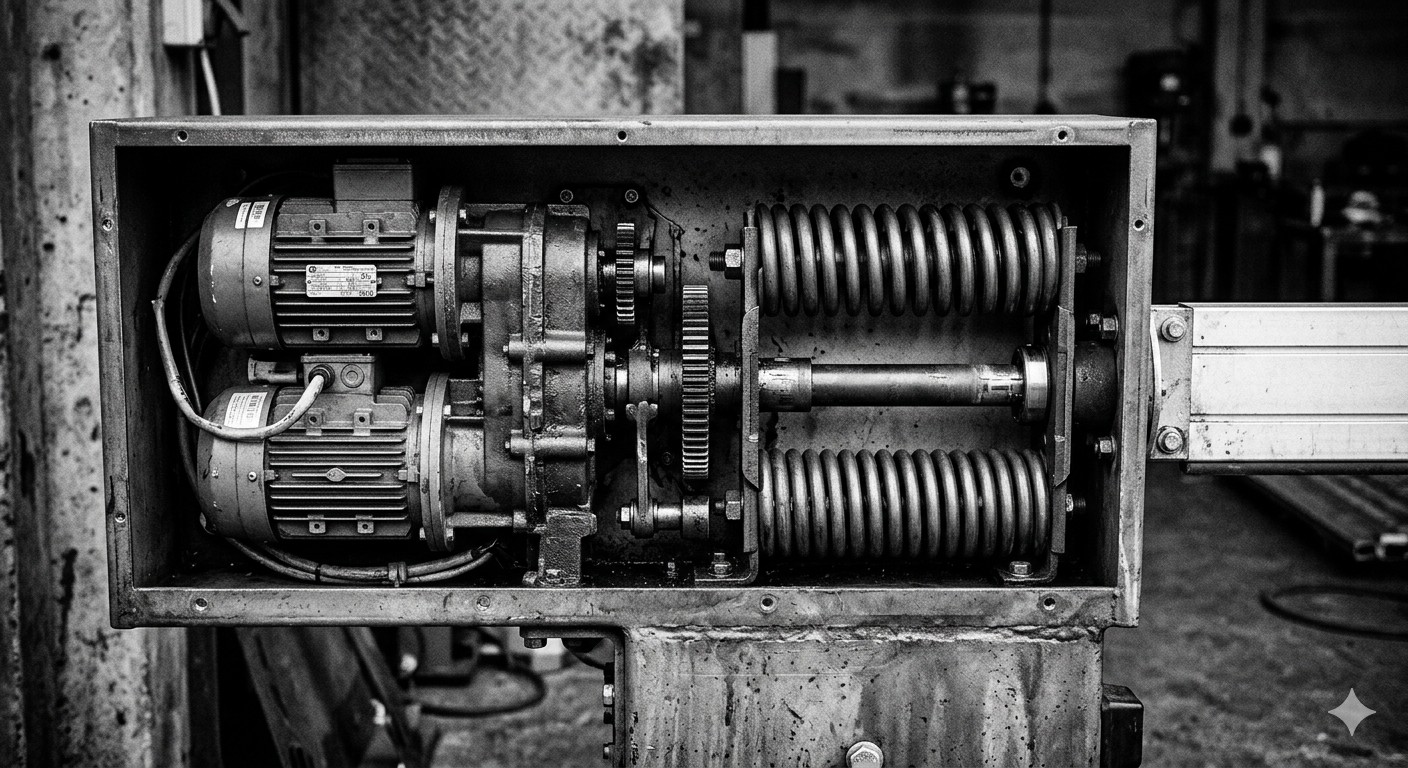
The motor inside a barrier gate determines nearly everything about how the gate performs: how fast the arm lifts, how quietly it operates, how many cycles it can handle per hour, and how long the entire unit will last before it needs major service. Yet motor type is one of the most overlooked specifications during the purchasing process. Buyers focus on arm length, housing aesthetics, and software features while the mechanism doing the actual work gets a passing glance.
This guide examines the three motor technologies used in modern parking barrier arm systems – AC induction, DC brushed and brushless, and hydraulic – and explains how each one affects performance, maintenance, and total cost of ownership.
The Role of the Motor in a Barrier Gate System
A barrier gate motor does more than spin a shaft. It must:
- Accelerate the arm from rest to operating speed in a fraction of a second
- Decelerate smoothly at the end of travel to avoid slamming and mechanical stress
- Hold position when the arm is raised or lowered, resisting wind loads and vibration
- Reverse instantly if a safety device detects an obstruction
- Repeat this cycle thousands of times per day without overheating or failing
The mechanism that translates motor rotation into arm movement – whether a gearbox, a belt drive, a worm gear, or a hydraulic cylinder – is equally critical. The best motor in the world paired with an undersized gearbox will underperform and wear prematurely.
For a complete picture of how these components fit into the broader system, see our article on how automatic car park barriers work.
AC Induction Motors
How They Work
AC (alternating current) induction motors are the workhorses of industrial equipment. In barrier gate applications, a single-phase or three-phase AC motor drives a reduction gearbox that converts high-speed, low-torque motor output into the low-speed, high-torque motion needed to lift a barrier arm.
Traditional AC barrier gates use a simple on/off control scheme: the motor runs at full speed when energized and brakes (mechanically or electrically) when de-energized. More modern designs use variable frequency drives (VFDs) to control motor speed, enabling soft-start and soft-stop profiles that reduce mechanical wear.
Strengths
- Proven reliability: AC induction motors have been used in barrier gates for decades. The technology is mature, well-understood, and widely serviceable.
- High duty cycle capability: Properly rated AC motors can handle continuous operation in high-traffic environments (500+ cycles per hour for heavy-duty units).
- Lower component cost: AC motors and standard gearboxes are less expensive to manufacture than equivalent DC or hydraulic systems.
- Simple electrical requirements: Single-phase AC power is available at virtually every installation site. No battery backup conversion needed for basic operation.
Limitations
- Speed control is coarser: Without a VFD, AC motors operate at fixed speed, making smooth acceleration and deceleration profiles harder to achieve.
- Noise: Gearbox-driven AC systems tend to be louder than direct-drive DC or hydraulic alternatives, particularly as gears wear.
- Heavier units: AC motor and gearbox combinations are typically bulkier, which can complicate installation in space-constrained locations.
- Energy consumption: AC motors draw more power at idle and during operation compared to modern DC brushless designs.
Manufacturers Using AC Motors
FAAC and CAME both offer AC-driven barrier gate lines aimed at medium-to-high-traffic commercial applications. Many legacy installations from various manufacturers worldwide run on AC induction motors that have been in service for 15-20 years, a testament to the technology’s durability.
DC Motors (Brushed and Brushless)
How They Work
DC (direct current) motors convert electrical energy from a DC power supply – typically a rectified AC input or a battery – into rotational motion. In barrier gates, DC motors usually drive the arm through a belt, chain, or direct-coupled gear mechanism.
Two sub-types matter:
- Brushed DC motors: Use physical carbon brushes to transfer current to the rotor. Simple, inexpensive, but brushes are a wear item.
- Brushless DC (BLDC) motors: Use electronic commutation instead of physical brushes. More efficient, quieter, and longer-lasting, but more expensive and complex.
BLDC motors have become the dominant choice in new barrier gate designs from nearly every major manufacturer.
Strengths
- Precise speed control: DC motors respond instantly to voltage changes, enabling smooth, programmable acceleration and deceleration curves. This is critical for arm motion profiles that need to be fast in the middle of travel but gentle at the endpoints.
- Quiet operation: BLDC motors with belt-drive mechanisms produce significantly less noise than gearbox-driven AC systems. This matters for residential areas, hospitals, and hotel entrances.
- Energy efficiency: BLDC motors consume 30-50% less energy than equivalent AC motors, especially at partial loads and during idle.
- Battery backup integration: DC motors operate natively on DC power, making battery backup seamless. When AC power fails, the gate continues to operate on battery without an inverter.
- Compact size: DC motors deliver high torque-to-size ratios, allowing slimmer gate housings.
Limitations
- Brush replacement (brushed types): Brushed DC motors require periodic brush replacement, typically every 500,000 to 1,000,000 cycles. In high-traffic facilities, this can mean annual service.
- Controller complexity: BLDC motors require electronic speed controllers (ESCs) that add cost and represent an additional failure point.
- Cost premium: BLDC motor assemblies cost 20-40% more than equivalent AC units.
- Heat management: High-duty-cycle DC motors in enclosed housings can overheat without adequate ventilation or thermal management design.
Manufacturers Using DC Motors
Magnetic Autocontrol uses BLDC motors in their MicroDrive and MBE series, which are widely regarded as benchmarks for barrier gate motor performance. Nice/Hi-Speed employs BLDC technology in their high-speed barrier lines. Parking BOXX integrates DC motor platforms into systems designed for facilities that combine access control with payment processing, where reliable gate operation is essential to the revenue chain.
Hydraulic Systems
How They Work
Hydraulic barrier gates use an electric motor to drive a hydraulic pump, which pressurizes fluid that actuates a cylinder or rotary actuator to move the arm. The hydraulic fluid serves as both the power transmission medium and the damping mechanism.
Hydraulic systems were the original high-performance barrier gate technology and remain the standard for certain demanding applications.
Strengths
- Exceptional force and control: Hydraulic actuators deliver smooth, powerful arm motion that is difficult to match with electromechanical systems, especially for long or heavy arms (6 meters and beyond).
- Built-in damping: The hydraulic fluid naturally absorbs shocks and provides progressive deceleration without additional mechanical components.
- Extreme duty cycle tolerance: Hydraulic systems can operate continuously at high cycle rates without the thermal concerns that affect electric motors.
- Intrinsic safety: If power is lost, hydraulic systems can be designed to fail in a specific position (arm up or arm down) based on valve configuration, without relying on battery backup.
Limitations
- Maintenance intensity: Hydraulic systems require periodic fluid changes, seal inspections, hose replacements, and leak monitoring. This is the most maintenance-demanding motor type.
- Environmental sensitivity: Hydraulic fluid viscosity changes with temperature, affecting arm speed. Cold-weather installations require fluid heaters or cold-rated fluids. Leaks pose environmental contamination risk.
- Noise from the pump: While arm motion is smooth and quiet, the hydraulic pump itself can be loud, especially under load.
- Higher cost: Hydraulic barrier gates carry a significant price premium – often 2-3 times the cost of an equivalent electromechanical unit.
- Specialized service required: Not every gate technician is comfortable working on hydraulic systems. Finding qualified service providers can be challenging in some regions.
Manufacturers Using Hydraulic Systems
FAAC has a long history with hydraulic barrier gates, particularly for heavy-duty applications at toll plazas and high-security facilities. Magnetic Autocontrol offers hydraulic options in their product line for extra-long arm applications. Several specialized manufacturers in the toll and military security sectors use hydraulic exclusively.
Motor Type Comparison Table
| Specification | AC Induction | DC Brushed | DC Brushless (BLDC) | Hydraulic |
|---|---|---|---|---|
| Arm open speed | 1.5-4 seconds | 1-3 seconds | 0.9-3 seconds | 1-6 seconds |
| Maximum arm length | 3-6 meters | 3-5 meters | 3-6 meters | 4-8+ meters |
| Duty cycle | 50-100% | 50-80% | 80-100% | 100% |
| Noise level | Moderate-high | Low-moderate | Low | Low (arm), moderate (pump) |
| Energy consumption | Higher | Moderate | Lowest | Moderate-high |
| Battery backup | Requires inverter | Native | Native | Requires inverter |
| Maintenance interval | 12-24 months | 6-12 months (brushes) | 18-36 months | 6-12 months (fluid/seals) |
| Typical lifespan | 10-15 years | 5-8 years (brushes limit) | 12-20 years | 10-20 years |
| Relative cost | $ | $ | $$ | $$$ |
Gear and Drive Mechanisms
The motor is only half the story. The mechanism that connects the motor to the arm determines the final performance characteristics.
Worm Gear Drives
Used primarily with AC motors. Worm gears provide high reduction ratios and inherent self-locking (the arm stays in position without a brake). The trade-offs are lower efficiency (60-70%) and higher noise.
Spur and Helical Gear Drives
More efficient than worm gears (85-95%) and quieter. Common in modern AC and DC brushed systems. Require a separate brake mechanism to hold the arm in position.
Belt and Chain Drives
Popular in BLDC barrier gates. Belts offer quiet, smooth operation with minimal backlash. Chains are noisier but handle higher loads. Both require periodic tension adjustment.
Direct Hydraulic Actuators
Hydraulic cylinders or rotary actuators connect directly to the arm pivot. This eliminates gearbox losses entirely, providing the most direct and controllable power transmission.
Selecting the Right Motor Type
The right motor depends on the installation’s specific demands. Use this decision framework:
Choose AC if:
- Budget is the primary constraint
- The facility has reliable AC power with no backup requirement
- Moderate traffic (under 300 cycles/hour)
- Qualified local technicians are familiar with AC motor service
Choose DC Brushless if:
- Quiet operation matters (residential, hospitality, healthcare)
- Battery backup is required for power outages
- Energy efficiency is a priority
- High traffic with variable arm speed profiles needed
- You want the longest interval between maintenance visits
Choose Hydraulic if:
- Arm length exceeds 6 meters
- The gate must operate in extreme conditions (temperature, wind, seismic)
- Continuous 100% duty cycle is required with zero thermal risk
- The budget and maintenance infrastructure can support hydraulic service
- Security applications demand fail-fixed arm positioning
For a detailed maintenance schedule aligned to each motor type, see our guide on barrier gate preventive maintenance.
Standards and Specifications
When specifying barrier gate motors, reference the applicable standards:
- NEMA MG 1: Motor and generator standards covering performance, testing, and rating for AC and DC motors used in industrial applications.
- IEEE C62.41: Surge protection standards relevant to motor controllers exposed to power line transients.
- UL 325: Safety standard for gate operators that includes motor performance and safety requirements (covered in detail in our compliance articles).
The International Parking and Mobility Institute (IPMI) also publishes recommended practices for specifying parking equipment, including motor performance benchmarks for different facility types.
Emerging Trends
Several developments are reshaping the barrier gate motor landscape:
- Integrated motor-controller units: Rather than separate motor and controller, manufacturers are integrating both into a single sealed unit, reducing wiring complexity and failure points.
- Regenerative braking: BLDC systems are beginning to recover energy during arm deceleration, feeding it back to the battery or power supply. The energy savings are modest per cycle but meaningful over millions of operations.
- IoT-connected diagnostics: Motors with embedded sensors report temperature, current draw, cycle count, and vibration data to cloud platforms, enabling predictive maintenance instead of calendar-based service.
- Solar-powered DC gates: For remote installations without grid power, low-energy BLDC motors paired with solar panels and battery banks are becoming viable.
Key Takeaways
- AC induction motors are the most affordable and proven option, best suited for moderate-traffic facilities with reliable power infrastructure.
- DC brushless motors have become the new standard for most commercial barrier gate installations, offering the best balance of speed, efficiency, noise, and battery backup capability.
- Hydraulic systems remain essential for extra-long arms, extreme duty cycles, and specialized security applications, but carry higher cost and maintenance requirements.
- The drive mechanism (gearbox, belt, or direct actuator) matters as much as the motor type for final performance, noise, and longevity.
- Always specify motor performance against recognized standards (NEMA, UL 325) and verify that the manufacturer’s duty cycle rating matches your actual traffic volume – not your projected best-case scenario.
- Invest in the motor technology that matches your operating environment, and pair it with a maintenance schedule designed for that specific system.