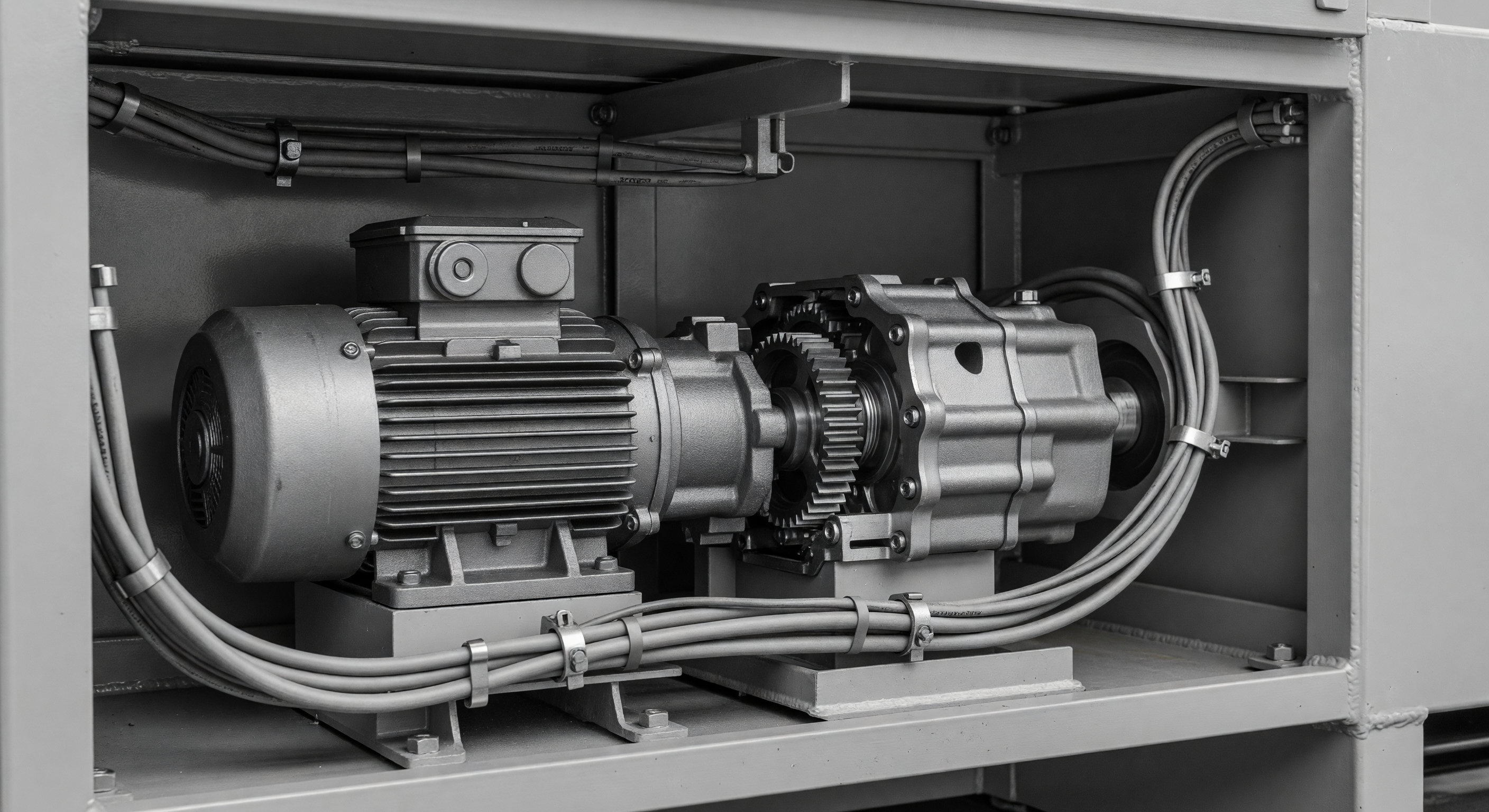
Motor choice is the single most consequential hardware decision in a barrier gate. It determines duty cycle, repair cost, cold-weather behavior, and — indirectly — whether the gate becomes the facility’s most-complained-about asset. Yet most spec sheets list only one variable: amperage draw.
The market has settled into two camps. AC-motor gates dominate the high-duty commercial tier. DC-motor gates dominate residential and light commercial. The overlap in the middle is where most buyers get the decision wrong.
Duty Cycle Realities
AC motors handle continuous duty. A Class 4 commercial access lane — airport cell-phone lot, urban garage with constant throughput — can push a gate through 6,000+ cycles per day. Industrial AC motors with thermal overload protection are the only option that survives that load without derating.
DC motors, specifically the permanent-magnet brushed variety common in residential gates, fatigue faster. Manufacturers rate them for 1,000-1,500 cycles per day, but warranty data from fleet operators suggests the real sustainable load is closer to 700. Exceed it regularly and brush wear accelerates non-linearly.
Cold-Weather Behavior
Below -10°C, lubrication viscosity in both gearboxes climbs. AC motors handle the starting-torque spike with thermal headroom; they were designed for industrial contexts where momentary overload is normal. DC motors trip overcurrent protection more readily, which looks like “gate randomly fails to open” to the end user.
Canadian and Upper-Midwest operators consistently report higher winter service calls on DC-equipped gates. The fix isn’t a different motor — it’s heated gearbox compartments, which add $400-800 per lane and are rarely specified until after the first February service nightmare.
Repair Economics
Here the calculus flips. DC brushed motors are field-serviceable — a technician can swap brushes in 15 minutes for under $50 in parts. An AC motor failure almost always means full motor replacement; parts alone run $600-1,400 depending on manufacturer, and reassembly requires pulling the gate arm and recalibrating limit switches.
Over a 10-year ownership window, commercial AC installations typically have lower total failure count but higher per-incident cost. DC installations have more frequent service events but lower cost per event. For an operator running 12 lanes, the AC TCO usually wins. For a residential HOA with one lane, DC wins.
Frequently Asked Questions
Are brushless DC motors changing this comparison?
Yes, but slowly. BLDC motors eliminate the brush-wear failure mode and narrow the duty-cycle gap considerably. They remain more expensive than brushed DC and have not displaced AC in heavy commercial applications because controller electronics add a new failure mode that’s harder to field-service.
How does UL 325 classification affect motor choice?
UL 325 classes (I through IV) describe usage environment, not motor type. A Class IV commercial-industrial gate has no inherent preference, but the duty cycle Class IV implies effectively excludes brushed DC motors from serious consideration.
What about solar-powered barrier gates?
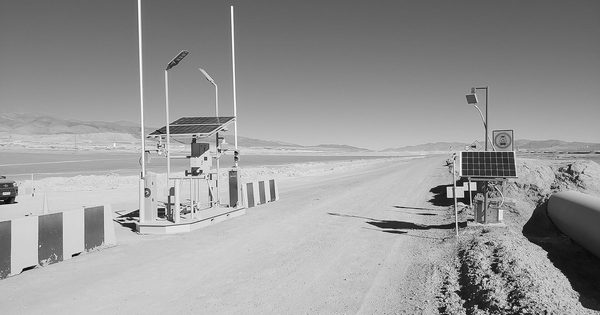
Solar installations almost exclusively use DC motors because inverter losses make AC impractical on battery budgets. These are typically low-duty applications — gated driveways, parking lot exits at off-hours facilities — where DC’s cycle limits aren’t a constraint.
Can I retrofit an AC motor into a DC gate housing?
Technically yes with enough fabrication work. Practically no — the control board, limit switch circuitry, and safety-edge integration are all DC-native. A motor swap that assumed “it’s just a motor” is a reliable way to spend $3,000 reinventing the gate.
Hero image: “Boom barrier, EuroVelo 13, Suchohrad” by Herzi Pinki, CC BY-SA 3.0, via Wikimedia Commons (https://commons.wikimedia.org/wiki/File:Boom_barrier,_EuroVelo_13,_Suchohrad.jpg).

)