Every barrier gate installation starts with a fundamental decision: how will vehicles identify themselves at the entry and exit lanes? The three dominant approaches – RFID, license plate recognition (LPR), and ticket-based systems – each bring distinct advantages, limitations, and cost profiles. Choosing the wrong method can mean sluggish throughput, frustrated drivers, and maintenance headaches that persist for years.
This guide breaks down how each access control technology works with barrier gates, where each method excels, and how to match the right solution to your facility’s traffic patterns, security requirements, and budget.
How Barrier Gate Access Control Works
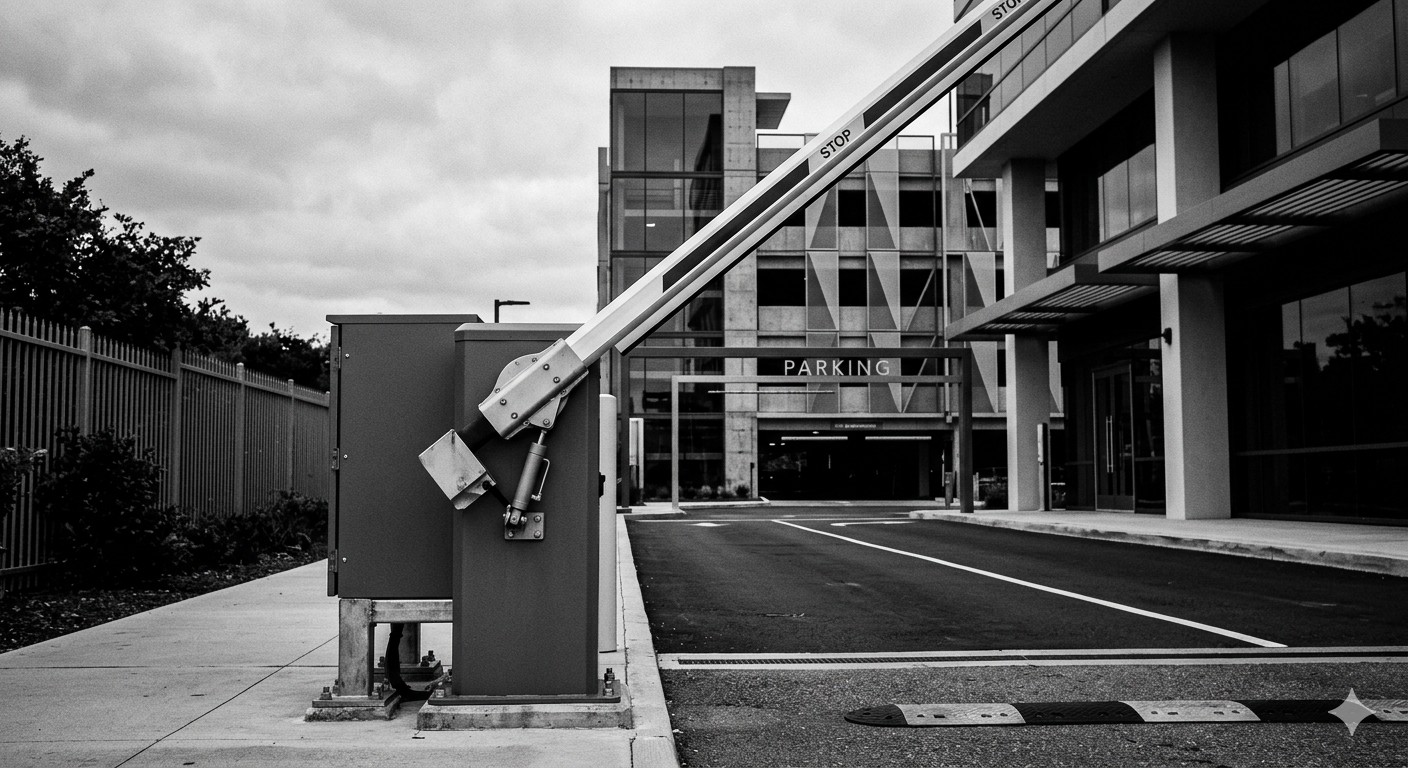
A parking lot gate control system is more than just the arm that lifts and lowers. It’s a coordinated chain: a credential is presented or detected, the access controller validates it, and the barrier gate receives the open command. The speed, reliability, and cost of that chain depend almost entirely on the credential technology you select.
Modern systems from manufacturers like CAME, FAAC, Magnetic Autocontrol, Nice/Hi-Speed, and Parking BOXX all support multiple credential types, but the infrastructure requirements differ significantly. Understanding these differences up front saves costly retrofits later.
For a broader look at how the mechanical and electronic components work together, see our overview of how automatic car park barriers work.
RFID Access Control
How RFID Works at Barrier Gates
Radio-frequency identification (RFID) uses electromagnetic fields to automatically identify tags attached to vehicles or carried by drivers. In parking applications, a reader antenna mounted near the gate detects the tag, queries the access control database, and triggers the barrier arm – often before the vehicle even comes to a full stop.
Two main RFID frequencies dominate parking:
- UHF (Ultra High Frequency, 860-960 MHz): Read ranges of 3-10 meters, enabling hands-free drive-through operation. This is the standard for most modern parking RFID installations.
- HF (High Frequency, 13.56 MHz): Shorter read range (typically under 10 cm), requiring drivers to tap or wave a card at a reader. Common in legacy systems and multi-use access cards.
Strengths of RFID
- Speed: UHF long-range RFID can identify vehicles at 15-30 mph, keeping traffic flowing with minimal queuing.
- Hands-free operation: Drivers don’t need to stop, roll down windows, or interact with any device – a significant advantage in harsh weather.
- Durability: Passive UHF tags have no battery and can last 10+ years. Windshield-mount tags are inexpensive to produce and distribute.
- Database control: Tags can be activated, deactivated, or reassigned instantly in software. Lost tags are disabled with a click.
Limitations of RFID
- Tag distribution required: Every authorized vehicle needs a tag. For facilities with high visitor volumes, this creates logistics and cost overhead.
- Interference potential: Metal-rich environments, nearby RF equipment, or improperly positioned readers can cause misreads.
- Not suitable for transient visitors: Walk-up visitors or occasional parkers without pre-issued tags need an alternative credential path.
Best Use Cases
RFID excels at facilities with a known, recurring user base: corporate campuses, gated communities, employee parking structures, and airport staff lots. It’s the standard recommendation for sites where more than 70% of daily traffic is registered users.
License Plate Recognition (LPR)
How LPR Works at Barrier Gates
LPR (also called ANPR – automatic number plate recognition) uses specialized cameras and optical character recognition software to read vehicle license plates as they approach the gate. The plate number becomes the credential: if it matches an authorized list or a validated parking session, the gate opens.
Modern LPR systems use infrared illumination to capture plate images day or night, and AI-powered recognition engines can handle plates across multiple states, provinces, and countries. Several manufacturers now integrate LPR directly into barrier gate and access control packages, while dedicated AI-driven LPR camera systems offer advanced analytics beyond simple gate triggering.
Strengths of LPR
- Truly credential-free: No tags, cards, or tickets to produce, distribute, or replace. The vehicle is its own credential.
- Dual use: The same cameras that control access also provide security surveillance, occupancy data, and dwell-time analytics.
- Visitor-friendly: Pre-registration via a website or app lets visitors enter without any physical token. The system simply matches the plate.
- Audit trail: Every entry and exit is automatically logged with a plate image and timestamp.
Limitations of LPR
- Accuracy is not 100%: Even the best LPR systems operate at 95-99% read accuracy depending on conditions. Dirty plates, obscured plates, temporary tags, and paper dealer plates cause failures. Each miss requires manual intervention or a fallback credential.
- Camera positioning is critical: Angle, height, distance, and lighting all affect read rates. Poor installation can undermine even premium LPR hardware.
- Higher initial cost: LPR cameras, servers (or cloud subscriptions), and integration software carry a higher upfront price than basic RFID readers.
- Privacy considerations: Capturing and storing plate images raises data privacy questions. Operators must comply with local and state regulations governing surveillance data retention.
Best Use Cases
LPR is ideal for mixed-use facilities that serve both regular parkers and transient visitors: municipal garages, hospital campuses, shopping centers, and university lots. It’s also the leading choice for enforcement-first operations where plate data feeds citation systems.
For a deeper understanding of how LPR technology is evolving alongside parking infrastructure, parkingtech.org publishes useful technology primers and vendor-neutral analysis.
Ticket-Based Systems
How Ticket Systems Work at Barrier Gates
Ticket dispensers issue a physical ticket (paper, barcode, or QR code) when a vehicle arrives. The driver takes the ticket, the gate opens, and the ticket serves as the parking credential throughout the stay. At exit, the ticket is inserted into a pay station or presented to a cashier, payment is processed, and the exit gate opens.
Despite being the oldest of the three technologies, ticket systems remain extremely common – especially in high-turnover transient parking environments.
Strengths of Ticket Systems
- Universal accessibility: No pre-registration, app download, or tag required. Any driver can enter immediately.
- Proven reliability: Ticket dispensers and validators use mature, well-understood mechanics. Thousands of installations have operated for decades.
- Clear revenue tracking: Each ticket creates a discrete transaction record, making revenue reconciliation straightforward.
- Low barrier to entry: Initial hardware costs are typically lower than LPR systems, and integration with existing pay stations is well standardized.
Limitations of Ticket Systems
- Slow throughput: Every vehicle must stop, reach for a ticket, and wait for the gate. Average transaction time is 8-15 seconds per vehicle versus 1-3 seconds for RFID.
- Consumable costs: Paper, ink, and printer maintenance add ongoing expense. High-volume facilities can consume tens of thousands of tickets per month.
- Ticket loss and fraud: Lost tickets require fee adjudication. Ticket swapping, counterfeiting, and tailgating are well-known revenue leakage vectors.
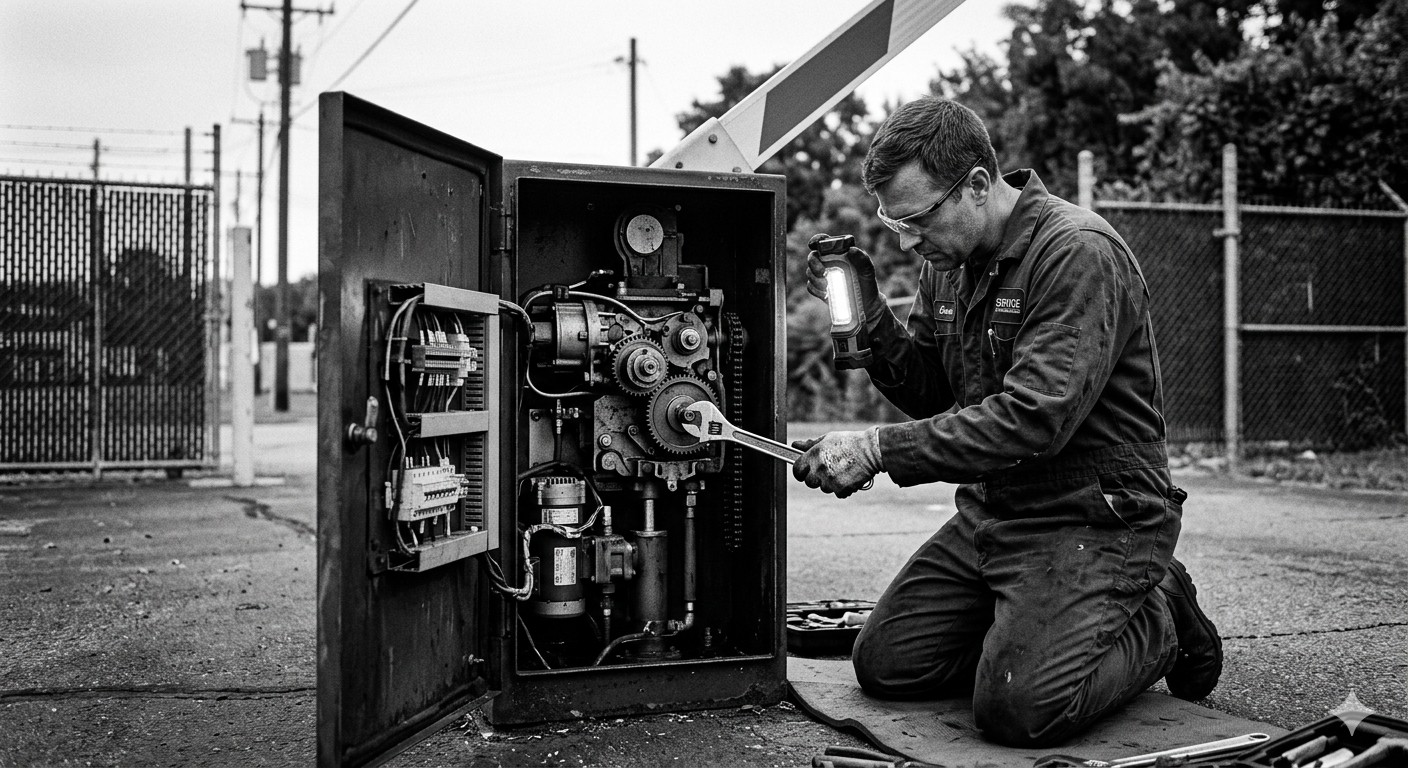
- Mechanical maintenance: Ticket dispensers and validators have moving parts that wear. Jams, sensor failures, and printer issues require regular service.
Best Use Cases
Ticket systems suit high-transient facilities where most users are one-time or infrequent visitors: event venues, downtown public garages, airport short-term lots, and retail parking. They are also practical as a fallback lane alongside RFID or LPR for unregistered visitors.
Head-to-Head Comparison
The following table summarizes the critical differences across the metrics that matter most for parking lot gate control decisions.
| Metric | RFID | LPR | Ticket |
|---|---|---|---|
| Transaction speed | 1-3 seconds (UHF long-range) | 2-5 seconds | 8-15 seconds |
| Hands-free operation | Yes (UHF) | Yes | No |
| Visitor support | Poor (requires pre-issued tag) | Good (pre-register plate) | Excellent (walk-up) |
| Read/validation accuracy | 99%+ | 95-99% | 99%+ (if ticket undamaged) |
| Per-credential cost | $2-$10 per tag | $0 (plate is credential) | $0.02-$0.05 per ticket |
| Hardware cost (per lane) | $1,500-$5,000 | $5,000-$15,000 | $3,000-$8,000 |
| Ongoing consumables | Replacement tags | None | Paper, ink, printer parts |
| Security/audit trail | Moderate (tag-based) | High (plate images) | Low-moderate (ticket only) |
| Weather sensitivity | Low | Moderate (fog, snow on plates) | Moderate (wet tickets jam) |
| Typical lifespan | 10+ years (readers), tags indefinite | 7-10 years (cameras) | 5-8 years (dispensers) |
Hybrid and Multi-Credential Approaches
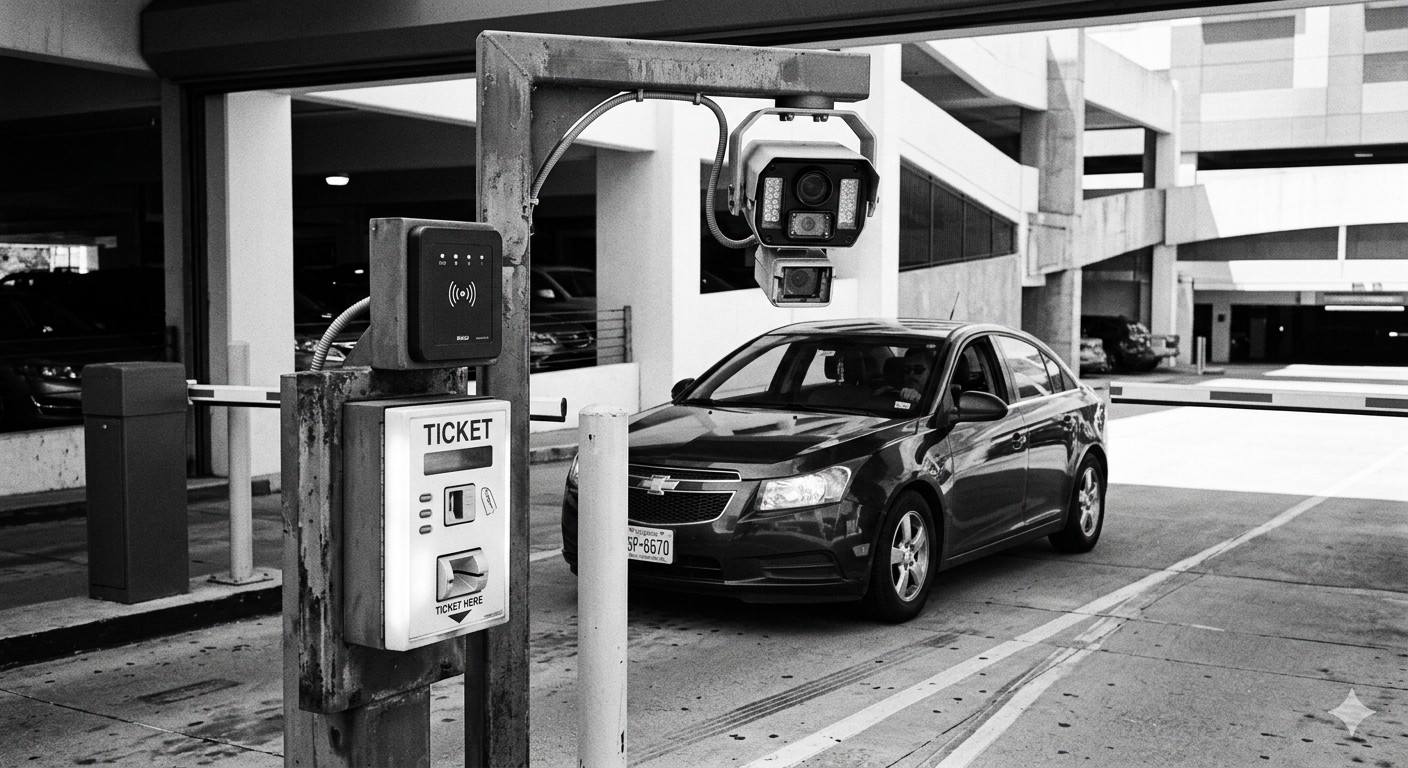
The industry trend – endorsed by the International Parking and Mobility Institute (IPMI) – is moving away from single-technology lanes toward multi-credential entry points. A single lane might offer UHF RFID as the primary method, LPR as a secondary automatic capture, and a ticket dispenser or QR intercom as the fallback for unrecognized vehicles.
This layered approach delivers several advantages:
- Maximum throughput for regulars: RFID or LPR handles 70-90% of entries without any stop.
- Universal access for visitors: A ticket or QR-code option ensures no one is turned away.
- Redundancy: If one system fails, another layer keeps traffic moving.
- Migration path: Facilities can shift credential ratios over time without replacing hardware.
Most modern barrier gate controllers from leading manufacturers support multi-credential input natively. When evaluating systems, confirm that the controller can prioritize credential types (e.g., RFID first, LPR second, ticket fallback) and that the access management software can handle mixed credential databases.
For a broader equipment overview that covers barrier types alongside access control, our complete buyer’s guide to barrier gate systems walks through the full decision framework.
Integration with Parking Management Software
No access control technology works in isolation. The credential reader feeds data to a parking access and revenue control system (PARCS) that manages validation, rate calculation, reporting, and payment processing.
Key integration questions to ask vendors:
- API availability: Does the access control hardware support open APIs, or are you locked into a single software platform?
- Cloud vs. on-premise: Cloud-connected systems enable remote management and real-time monitoring; on-premise systems offer lower latency and no subscription fees.
- Mobile payment integration: Can the system accept mobile wallet or app-based payments alongside the primary credential?
- Scalability: If you add lanes, locations, or credential types in the future, can the management software accommodate the growth without a full platform change?
The IEEE and other standards bodies continue to push for interoperability across access control protocols, which benefits operators by reducing vendor lock-in. Look for systems that support industry-standard communication protocols like OSDP (Open Supervised Device Protocol) recommended by the Security Industry Association.
Cost Considerations Beyond Hardware
Initial hardware costs tell only part of the story. A realistic total cost of ownership (TCO) analysis should include:
- Installation and integration: LPR camera positioning, network cabling, and server setup can double hardware costs. RFID readers typically have simpler installations.
- Tag or credential logistics: RFID programs require ongoing tag procurement, enrollment, and replacement workflows.
- Consumables: Ticket systems carry permanent paper and printer maintenance costs.
- Software licensing: Many LPR platforms charge per-camera annual fees. Some RFID management platforms are licensed per-user or per-reader.
- Support contracts: Budget 10-15% of hardware cost annually for maintenance and support across all technologies.
| Cost Factor | RFID | LPR | Ticket |
|---|---|---|---|
| Year 1 (hardware + install per lane) | $4,000-$10,000 | $10,000-$25,000 | $6,000-$14,000 |
| Annual operating (per lane) | $500-$2,000 | $2,000-$5,000 | $1,500-$4,000 |
| 5-year TCO (per lane) | $6,000-$18,000 | $18,000-$50,000 | $12,000-$34,000 |
Ranges reflect single-lane estimates and vary significantly by vendor, region, and feature set.
Making the Right Choice
Selecting an access control method is not a technology beauty contest. It’s a business decision that should be driven by:
- Your user mix: What percentage of daily traffic is regular vs. transient? High-regular-user sites lean RFID or LPR. High-transient sites lean ticket or LPR.
- Throughput requirements: Peak arrival rates dictate how fast each lane must process. If you need 400+ vehicles per hour per lane, RFID or LPR is mandatory.
- Budget reality: LPR delivers the richest data but at the highest cost. Ticket systems cost less but carry ongoing consumable and labor burdens.
- Security posture: If plate-level audit trails matter (enforcement, security-sensitive facilities), LPR provides the strongest evidence chain.
- Future roadmap: Where is your operation heading in 5 years? A system that supports credential migration avoids a forklift upgrade down the road.
Key Takeaways
- RFID delivers the fastest, most reliable throughput for known user populations but requires tag logistics and offers no built-in visitor support.
- LPR eliminates physical credentials entirely, provides rich data and security footage, but costs more and is sensitive to camera positioning and plate condition.
- Ticket-based systems remain the most universally accessible option for transient-heavy facilities, though they are the slowest and carry ongoing consumable costs.
- Hybrid multi-credential lanes are the emerging industry standard, combining the strengths of two or three technologies while mitigating each one’s weaknesses.
- Total cost of ownership – not just hardware price – should drive the decision. Factor in installation, consumables, software licensing, and support contracts over a 5-year horizon.
The best barrier gate access control system is the one that matches your specific traffic patterns, user demographics, and operational priorities. Take the time to map those requirements before locking in a technology, and you’ll build a system that performs well for years.