Tailgating — the practice of a second vehicle following a first through a single gate cycle — is the largest unmeasured revenue leak in gated parking. In facilities that have retrofitted detection, audit data typically shows 2 to 6 percent of entry events are tailgate attempts, and in employee lots with lax enforcement the rate climbs above 10 percent. At a 400-space facility with a $15 daily rate, that is $50,000 to $150,000 of annual leakage that never shows up on the books.
It is also a security problem. A gate-credential system that does not discriminate between authorized vehicle and piggyback vehicle is no meaningful access control at all.
How Tailgate Events Actually Happen
A review of recorded gate incidents across several hundred facilities reveals three dominant patterns:
- Opportunistic piggyback — an unauthorized driver times their approach to follow an authorized vehicle through the open arm, hoping the gate re-arms after them rather than in between.
- Convoy entry — a single credential holder waves a friend through behind them. Common at employee lots and residential gates.
- Safety-reverse exploitation — a driver triggers the safety photo eye after an authorized vehicle clears, holding the gate open long enough for a second vehicle to enter.
Each pattern defeats a different layer of the system, so no single detection technology catches all three.
The Loop Geometry That Works
The baseline anti-tailgate installation is a three-loop lane:
- Arming loop — upstream of the arm, detects approach and triggers credential read
- Safety loop — directly under the arm, prevents descent on occupancy
- Exit loop — downstream of the arm, confirms vehicle departure and re-arms the gate
The anti-tailgate logic lives in the gate controller: the arm stays down until the exit loop has been occupied and then cleared. A second vehicle entering the arming zone while the exit loop is still occupied triggers a tailgate alarm and denies authorization.
The geometry matters. Loops spaced too close (under 4 feet apart) cause cross-talk and phantom occupancy. Too far apart (over 12 feet) and a short vehicle can sit between them undetected. The FHWA Traffic Detector Handbook prescribes 6 to 8 feet as the standard.
This baseline catches pattern 1 consistently but is defeated by pattern 2 when the authorized driver stops on the exit loop to let a friend through.
Adding Video Analytics
Modern anti-tailgate systems layer a video analytics camera looking down-lane with vehicle tracking logic. Platforms from Genetec, Milestone, and purpose-built parking vendors can identify:
- Number of unique vehicles that crossed the lane between credential authorizations
- Gap time between consecutive vehicles
- Stop-and-go patterns consistent with credential sharing
When the analytics report 2 vehicles across a single authorization event, the system flags the transaction and routes it to operator review. In enforced facilities, the second vehicle’s plate is read and billed to the credential holder or issued a citation.
Video analytics accuracy runs 95 to 98 percent under normal conditions, dropping in snow, heavy rain, and at night without IR illumination. The false-positive rate matters more than the false-negative rate — operators lose trust in a system that flags legitimate solo entries.
LPR as the Independent Witness
The third layer is license plate recognition. LPR does not prevent tailgates, but it provides the forensic record needed to enforce against repeat offenders. Every vehicle through the lane gets a plate read, independent of credential. When operations compares the LPR log to the credential authorization log, tailgate vehicles appear as plates without a matching authorization.
This reconciliation typically runs overnight as a batch job. Flagged vehicles feed a citation workflow, a watchlist for subsequent entries, or a “follow up with the credential holder” queue.
Operator Escalation Rules
Detection is worthless without consequence. The policy layer — what the facility does when a tailgate is flagged — determines whether behavior changes. Effective programs tier responses:
- First offense (credential holder): warning letter, citation of the rule
- Second offense within 90 days: credential suspension for 72 hours, monetary penalty
- Third offense: credential revocation
- Unauthorized tailgate vehicle (no associated credential): citation mailed via plate registration, plate added to deny-entry list
Published policy, with the detection infrastructure to back it up, changes behavior within 60 to 90 days. Residential and employee facilities routinely see tailgate rates drop 70 to 90 percent after enforcement begins.
What Does Not Work
Operators tempted to solve tailgating by slowing gate cycle times or reducing the safety reverse sensitivity are creating different problems. A gate cycle under 1.5 seconds with a 0.5-second clear-to-re-arm margin is mechanically achievable and eliminates most opportunistic tailgates without any additional sensors. Going faster than that risks vehicle strikes; going slower invites piggybacks.
Removing safety photo eyes or contact edges to prevent exploitation is a UL 325 violation and a liability catastrophe. Do not do this.
FAQ
How much does tailgate detection cost to retrofit?
A three-loop conversion with controller logic runs $3,000 to $6,000 per lane. Adding video analytics and an LPR camera adds $5,000 to $12,000 per lane depending on the software license model. Most facilities see payback within 18 months at moderate enforcement rates.
Can I prevent tailgates without detection hardware?
Marginally. Faster arm operators (sub-2-second cycle) and well-positioned loops reduce opportunistic tailgates. But you cannot meaningfully enforce without an independent record of what happened — detection plus video evidence is what makes citations stick.
Does the IPMI have guidance on this?
The International Parking & Mobility Institute publishes operational standards that address revenue protection broadly. Specific tailgate detection standards are generally left to the operator, since site conditions dictate the right technology mix.
What happens with exit gates?
Exit tailgates are less common (the incentive is inverted — everyone wants to leave) but still occur in pay-on-foot facilities where the second vehicle avoids payment. The same three-loop logic works, anchored to the payment confirmation event rather than credential authorization.
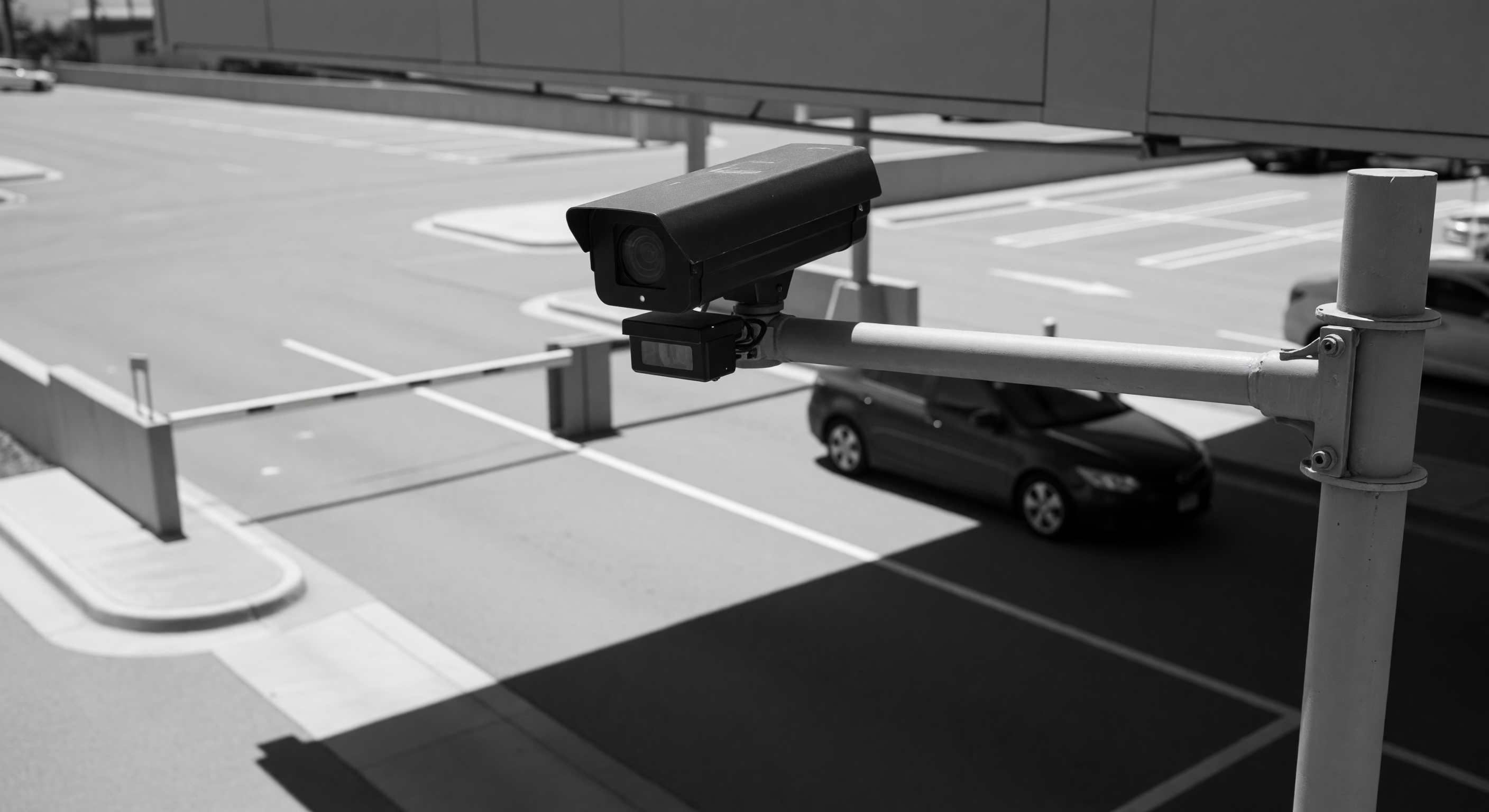
Hero image: “2 Szállító Street, barrier, 2020 Csepel” by Globetrotter19, CC BY-SA 3.0, via Wikimedia Commons (https://commons.wikimedia.org/wiki/File:2_Sz%C3%A1ll%C3%ADt%C3%B3_Street,_barrier,_2020_Csepel.jpg).
)