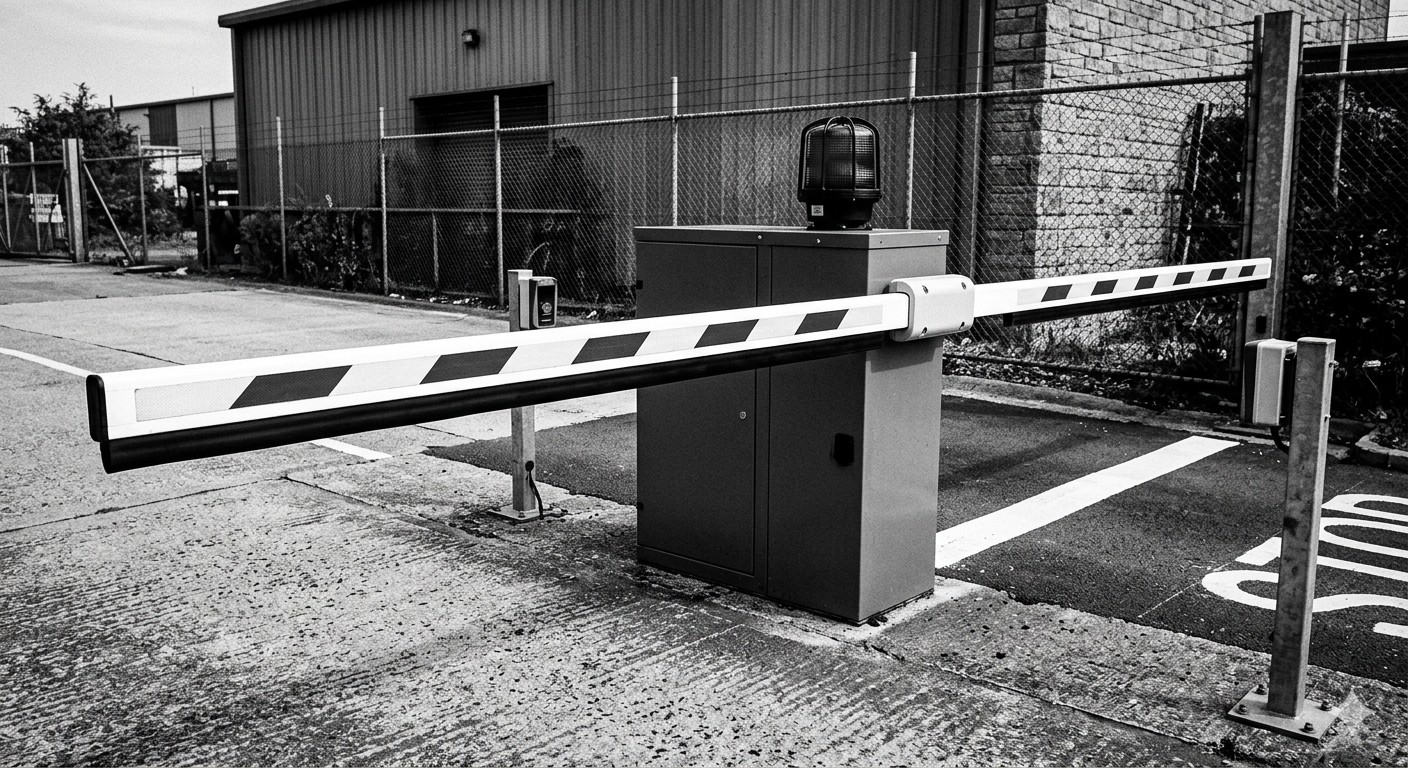
Hospitals operate under conditions that no other facility type shares. Emergency vehicles must enter without delay. Patients arrive in pain and distress. Visitors circle lots in frustration while a loved one waits inside. Staff who work 12-hour shifts need guaranteed spaces at 6 AM, and the parking structure cannot shut down for maintenance at convenient hours because there are no convenient hours.
Barrier gate systems help healthcare facilities manage this complexity by controlling who enters, where they park, and what they pay. But hospital parking demands more from access control technology than a standard commercial installation. This guide examines the specific requirements, technologies, and planning considerations that apply to healthcare parking.
The Unique Challenges of Hospital Parking
Healthcare parking problems are well documented and widely felt. According to industry surveys, parking is consistently among the top complaints from hospital patients and visitors. The root causes are structural:
- Unpredictable demand — patient volumes fluctuate by day, season, and public health events
- Mixed user populations — staff, patients, visitors, vendors, and emergency responders all need access with different rules
- 24/7 operations — the facility never closes, so the parking system cannot have scheduled downtime
- Emotional context — a person visiting a sick relative has zero tolerance for parking friction
- Regulatory requirements — ADA compliance, fire lane access, and emergency egress add layers of constraint
A barrier gate system does not solve all of these problems, but it creates the infrastructure to manage them systematically rather than reactively.
How Barrier Gates Serve Different Hospital User Groups
Staff Parking
Hospital employees are the most predictable user group, and barrier gates serve them well. Staff members receive credentials (RFID badges, proximity cards, or LPR-registered plates) that grant access to designated areas. Shift-based access rules ensure that night shift workers can enter staff lots while day shift spaces remain available for the incoming crew.
Common staff parking configurations include:
- Dedicated staff garages with RFID-only access
- Reserved floors or zones within shared structures
- Proximity-based assignment — closer spaces for overnight and ER staff
- Credential tiers — physicians, nurses, administrative staff, and contractors may have different zone access
Patient and Visitor Parking
Patients and visitors represent the highest-friction user group. They are unfamiliar with the facility, often stressed, and may have mobility limitations. Barrier gate lanes for this population should prioritize:
- Speed — high-speed barrier arms reduce wait times at entry
- Simplicity — ticket dispensers, QR code readers, or push-button entry with minimal instructions
- Wayfinding — clear signage at the gate indicating which lot serves which building
- Payment flexibility — validation programs, pay-on-foot kiosks, and mobile payment options
Emergency Vehicle Access
This is the non-negotiable requirement that distinguishes hospital parking from every other vertical. Emergency vehicles must be able to enter the facility without stopping for a barrier gate. Solutions include:
- Dedicated emergency lanes that bypass all barriers
- Preemption systems — the gate opens automatically when it detects an emergency vehicle transponder or receives a signal from dispatch
- Fail-open configuration — gates default to the open position during power outages or system failures
- Breakaway arms — barrier arms designed to snap off if struck, preventing vehicle damage and ensuring passage
Fire code requirements vary by jurisdiction, but the general principle is universal: a barrier gate must never delay emergency response. The Joint Commission, which accredits healthcare organizations, includes facility access provisions in its standards.
Technology Options for Healthcare Facilities
| Technology | Hospital Suitability | Key Advantage | Key Limitation |
|---|---|---|---|
| RFID / Proximity Cards | Excellent for staff | Fast, reliable, integrates with employee badges | Requires credential management for turnover |
| License Plate Recognition (LPR) | Strong for all users | No physical credential needed | Higher cost; accuracy varies with weather/lighting |
| Ticket Dispensers | Good for visitors | Low cost, familiar to users | Slower throughput, paper waste |
| QR Code / Mobile | Growing adoption | Pre-arrival distribution via patient portals | Requires smartphone; not ideal for elderly patients |
| Validation Systems | Essential for patients | Reduces cost burden on patients | Requires workflow integration with registration |
| Intercom + Remote Open | Necessary for exceptions | Handles edge cases (lost tickets, disabled users) | Requires staffed monitoring station |
Most hospitals deploy a combination. A typical configuration might use RFID for staff gates, ticket or LPR for visitor entry, and a dedicated open lane or preemption system for emergency vehicles.
For a detailed comparison of credential technologies, see our guide on RFID vs. LPR vs. ticket-based access control.
ADA Compliance in Hospital Parking
Healthcare facilities face heightened scrutiny on ADA compliance because their user population includes a disproportionate number of people with disabilities. Barrier gate installations must account for:
- Lane width — accessible lanes must accommodate wheelchair-accessible vans (minimum 96 inches per ADA parking standards)
- Reader height — credential readers and ticket dispensers must be reachable from a seated position in a vehicle
- Intercom placement — call buttons and intercoms at a height accessible from standard and modified vehicles
- Signage — accessible parking indicators with proper contrast and Braille where required
- Surface conditions — approaches to barrier gates must be smooth, level, and well-drained
The ADA.gov website provides federal accessibility standards. State and local codes may impose additional requirements that affect barrier gate placement and lane design.
Integrating Barrier Gates with Hospital Systems
Electronic Health Record (EHR) and Patient Portals
Forward-thinking hospitals are connecting parking to the patient experience. When a patient books an appointment through the portal, the system can issue a parking QR code or register their plate for LPR access. On arrival, the barrier gate opens based on the appointment record.
This integration reduces arrival stress and supports the broader goal of patient-centered care. Some systems also track patient arrival time, triggering clinic notifications that reduce lobby wait times.
Parking Guidance Systems
Large medical campuses benefit from combining barrier gates with real-time occupancy guidance. Sensors at each gate lane count entries and exits, and digital signs at the facility entrance direct drivers to the lot with available spaces. This prevents the circling behavior that frustrates visitors and wastes time.
Revenue and Validation Systems
Hospital parking revenue programs must balance cost recovery with patient goodwill. Barrier gate systems support several validation models:
- Automatic validation — patient registration triggers a parking credit that covers the visit duration
- Stamped validation — departments issue validation stamps that reduce or eliminate the parking charge
- Sliding scale — longer stays (chemotherapy, dialysis, multi-day recovery) receive larger discounts
- Hardship waivers — the system applies zero-charge codes for financial hardship cases
The IPMI has published guidance on healthcare parking revenue programs that balance financial sustainability with patient access.
Vendor Considerations for Healthcare Projects
Hospital parking projects require vendors with experience in complex, multi-stakeholder environments. The procurement process typically involves facilities management, IT, security, patient experience, and sometimes the C-suite.
Key manufacturers in the healthcare parking space include:
- CAME — offers modular barrier gate systems that scale from small clinics to large medical centers, with a service network that covers most of North America
- FAAC — widely used in institutional settings, with high-duty-cycle barrier mechanisms that handle 24/7 hospital traffic
- Magnetic Autocontrol — produces high-speed barriers well suited to high-volume hospital garages, with emergency preemption options
- Nice/HiSpeed — provides barrier systems with integrated safety features including infrared detection loops and LED status indicators
- Parking BOXX — manufactures hospital-specific parking systems that bundle access control, payment, and cloud management into a single platform
When evaluating vendors for a healthcare project, prioritize:
- Emergency access features — preemption, fail-open, breakaway arms
- 24/7 support availability — hospitals cannot wait until Monday morning for a gate repair
- Integration capabilities — can the system connect to your patient portal, EHR, or parking guidance platform?
- Compliance documentation — does the vendor provide ADA compliance specifications and fire code compatibility information?
The Parking BOXX blog at blog.parkingboxx.com has published case studies on healthcare parking deployments that illustrate how these selection criteria play out in practice.
Safety Standards and Compliance
Hospital barrier gate installations must meet a web of overlapping standards:
| Standard / Authority | Relevance |
|---|---|
| ADA (Americans with Disabilities Act) | Accessible lane design, reader heights, signage |
| Joint Commission | Facility access and emergency egress provisions |
| NFPA 88A (Parking Structures) | Fire protection in parking garages |
| Local fire codes | Emergency vehicle access, fire lane clearance |
| UL 325 | Gate operator safety (entrapment protection) |
| State DOT regulations | Signage and traffic flow at facility entrances |
Compliance is not optional in healthcare. A gate installation that blocks emergency access or fails to meet ADA standards exposes the hospital to regulatory action, litigation, and reputational damage.
For a comprehensive look at safety requirements, see our guide on barrier gate safety standards and compliance.
Planning a Hospital Barrier Gate Project
Step 1: Traffic Study
Before selecting hardware, conduct a traffic study that captures:
- Peak entry and exit volumes by hour and day of week
- User group proportions (staff vs. patient vs. visitor vs. vendor)
- Emergency vehicle frequency and access patterns
- Current pain points (where do backups occur? where do unauthorized vehicles enter?)
Step 2: Stakeholder Alignment
Hospital parking projects touch multiple departments. Form a project team that includes:
- Facilities / plant operations
- Information technology
- Security
- Patient experience / guest services
- Finance (for revenue and budget considerations)
- Clinical leadership (for staff parking policy input)
Step 3: System Design
Based on the traffic study and stakeholder input, design the lane configuration:
- Number of entry and exit lanes per lot or garage
- Dedicated lanes for staff, visitors, and emergency vehicles
- Equipment selection per lane (barrier gate model, reader type, signage)
- Integration points (PMS, EHR, guidance system, payment platform)
Step 4: Procurement and Installation
Healthcare procurement often requires formal RFPs and may involve GPO (Group Purchasing Organization) contracts. Installation timelines must account for:
- Phased deployment that keeps parking operational during construction
- Electrical and network infrastructure requirements
- Commissioning and testing, including emergency scenario drills
Step 5: Training and Go-Live
Staff training is critical. Security personnel, valet attendants, patient registration staff, and facilities teams all interact with the barrier gate system in different ways. A phased rollout with a parallel period (old and new systems running simultaneously) reduces risk.
Cost Considerations
Hospital barrier gate projects range from $50,000 for a small clinic with a single garage to over $500,000 for a large medical campus with multiple structures and full system integration.
Key cost drivers include:
- Number of lanes — each lane requires a barrier mechanism, reader, and controller
- LPR deployment — camera systems add significant cost but reduce credential management overhead
- Integration complexity — connecting to EHR, patient portals, and guidance systems requires custom development
- Emergency features — preemption systems, breakaway arms, and redundant power add to the baseline cost
- Ongoing maintenance — 24/7 facilities should budget 5-8% of system cost annually for preventive maintenance and repairs
Key Takeaways
- Hospital parking demands barrier gate systems that prioritize emergency access, ADA compliance, and zero downtime above all other features.
- Multiple user groups (staff, patients, visitors, emergency vehicles) require different access methods, often within the same facility. Hybrid systems combining RFID, LPR, tickets, and emergency preemption are the norm.
- Integration with patient portals and EHR systems transforms parking from a facility function into a patient experience tool.
- Vendor selection should weight emergency features, 24/7 support availability, and healthcare-specific integration experience over hardware price alone.
- Compliance with ADA, Joint Commission, NFPA, and UL 325 standards is mandatory and must be verified before the system goes live.
- A traffic study and multi-department stakeholder process should precede any equipment selection.