Choosing the right barrier gate system is one of the most consequential decisions a parking operator or facility manager will make. The gate controls every vehicle entering and leaving your lot, garage, or campus — and a poor choice shows up fast in maintenance bills, user complaints, and lost revenue.
This guide walks through the major types, features, specifications, and vendors you should evaluate before signing a purchase order. Whether you manage a 50-space office lot or a 5,000-space airport garage, the decision framework is the same: match the gate to your traffic volume, environment, security needs, and budget.
Types of Barrier Gate Systems
Not all barrier gates are interchangeable. The technology inside the housing determines speed, duty cycle, reliability, and cost.
Electromechanical Gates
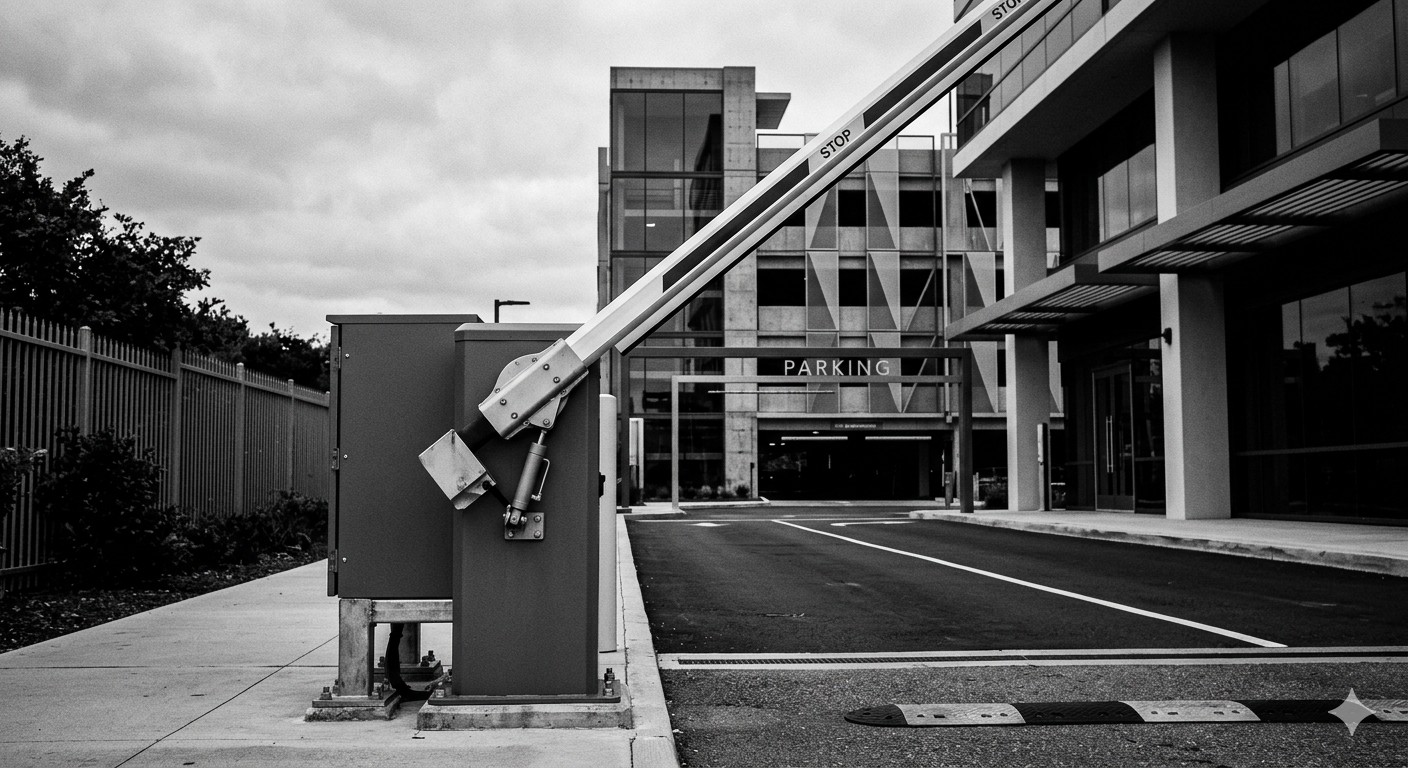
These use a geared motor and mechanical linkage to raise and lower the arm. They are the workhorses of the industry — reliable, repairable, and cost-effective for most applications. Most mid-range commercial gates from manufacturers like CAME, FAAC, and Parking BOXX fall into this category.
Best for: Standard commercial lots, office parks, residential complexes with moderate traffic.
Hydraulic Gates
Hydraulic barrier gates use fluid pressure to move the arm. They tend to operate more smoothly and handle heavier, longer arms — sometimes up to 8 meters (about 26 feet). Magnetic Autocontrol is well known for hydraulic models used in high-security and industrial settings.
Best for: High-security facilities, wide lanes, heavy-duty industrial applications.
High-Speed Barrier Gates
Designed for facilities processing hundreds or thousands of vehicles per hour, high-speed gates can cycle in under one second. Nice/Hi-Speed and Magnetic Autocontrol both offer models in this segment. The trade-off is higher upfront cost and more specialized maintenance.
Best for: Airports, transit hubs, toll plazas, busy urban garages.
Manual and Semi-Automatic Gates
At the low end, manual lift gates and semi-automatic models serve low-traffic or temporary applications. They cost less but require staff intervention or basic electronic control with no integration capability.
Best for: Temporary construction sites, low-traffic private lots, budget-constrained installations.
Key Specifications to Compare
When evaluating barrier gate systems, these are the specifications that matter most in real-world operation.
| Specification | What It Means | Typical Range |
|---|---|---|
| Arm length | Maximum lane width the gate can cover | 3 m to 8 m (10 ft to 26 ft) |
| Cycle time | Time to raise or lower the arm | 1 second to 6 seconds |
| Duty cycle | Percentage of time the gate can operate continuously | 50% to 100% (continuous) |
| IP rating | Protection against dust and water ingress | IP44 to IP55 |
| Operating temperature | Ambient temperature range | -20°C to +55°C (-4°F to +131°F) |
| Motor type | Electromechanical, hydraulic, or brushless DC | Varies by manufacturer |
| Power supply | Electrical input required | 120V/230V AC, some with 24V DC option |
| Safety features | Vehicle detection, anti-crush, breakaway arm | Standard on most commercial models |
Arm Length and Lane Width
The arm must span the full lane. Measure the actual opening — not the nominal lane width — and add a small buffer. For arms over 5 meters, you will likely need a hydraulic or counter-balanced mechanism. Articulated (folding) arms are an option when overhead clearance is limited.
Duty Cycle
This is arguably the most misunderstood specification. A gate rated at 50% duty cycle can operate for roughly half of any given time period before it needs to rest. For a busy garage processing 400+ vehicles per hour, you need a 100% (continuous) duty cycle gate. Manufacturers like FAAC and Magnetic Autocontrol publish detailed duty cycle charts — ask for them.
Speed
A gate that opens in 1.5 seconds versus 4 seconds makes a measurable difference in throughput. At peak hour, slow gates cause queuing. But speed is not free: faster mechanisms wear more quickly and cost more upfront. Match cycle time to your peak-hour vehicle count.
Features That Matter (and Features That Don’t)
Essential Features
- Auto-close with vehicle detection: The gate should close automatically after the vehicle clears, using loop detectors or other sensors. This is non-negotiable for revenue control.
- Anti-crush / obstacle detection: Safety systems that reverse the arm if it contacts a vehicle or person. UL 325 covers safety standards for gate operators in the United States.
- Breakaway arm: An arm designed to break free on impact rather than damaging the vehicle or gate mechanism. Replacement arms should be inexpensive and readily available.
- Manual release: A key-operated manual release for power failures. Every commercial gate should have one.
- Weather sealing: IP44 minimum for outdoor installations. Northern climates should look for IP55 and heater kits.
Nice-to-Have Features
- LED arm lighting: Improves visibility at night. Increasingly standard on mid-range and premium models.
- Integrated intercom mount: Saves installation time if you plan to add an intercom or call station.
- Counter-balance spring: Reduces motor load and extends lifespan on gates with longer arms.
- Battery backup: Keeps the gate operating during short power outages.
Features to Be Skeptical About
- Smartphone control as primary access: Works for small private lots, but is unreliable at scale for public-facing operations.
- Cloud-only management with no local fallback: If your internet goes down, your gate should still function.
Major Manufacturers Compared
The barrier gate market includes global brands and regional specialists. Here is a snapshot of the major players you will encounter when sourcing quotes.
| Manufacturer | Headquarters | Strength | Typical Application |
|---|---|---|---|
| CAME | Italy | Broad product range, global distribution | Commercial, residential |
| FAAC | Italy | High duty cycle, industrial builds | Airports, large garages |
| Magnetic Autocontrol | Germany | Hydraulic systems, high-security | Airports, government, tolling |
| Nice/Hi-Speed | Italy | High-speed gates, smart home integration | Transit hubs, mixed-use |
| Parking BOXX | North America | Integrated parking systems, pay stations | Commercial lots, mixed-use facilities |
| BFT | Italy | Compact designs, residential focus | Residential, small commercial |
| Came Parkare | International | Revenue control focus | Urban garages, municipalities |
No single manufacturer dominates every application. The right choice depends on your specific requirements, local dealer support, and the integration ecosystem you need.
Integration and Access Control
A barrier gate rarely operates in isolation. It connects to an access control system, payment infrastructure, or both. Before selecting a gate, confirm compatibility with your planned ecosystem.
Common Integration Methods
- Dry contact relay: The simplest method. A signal from your access control system triggers the gate to open. Nearly universal.
- RS-485 / serial communication: Allows two-way data exchange — the gate can report its status back to the controller.
- IP/Ethernet: Modern gates increasingly offer network connectivity for remote monitoring and management.
- Wiegand protocol: Standard for connecting card readers and credential systems to gate controllers.
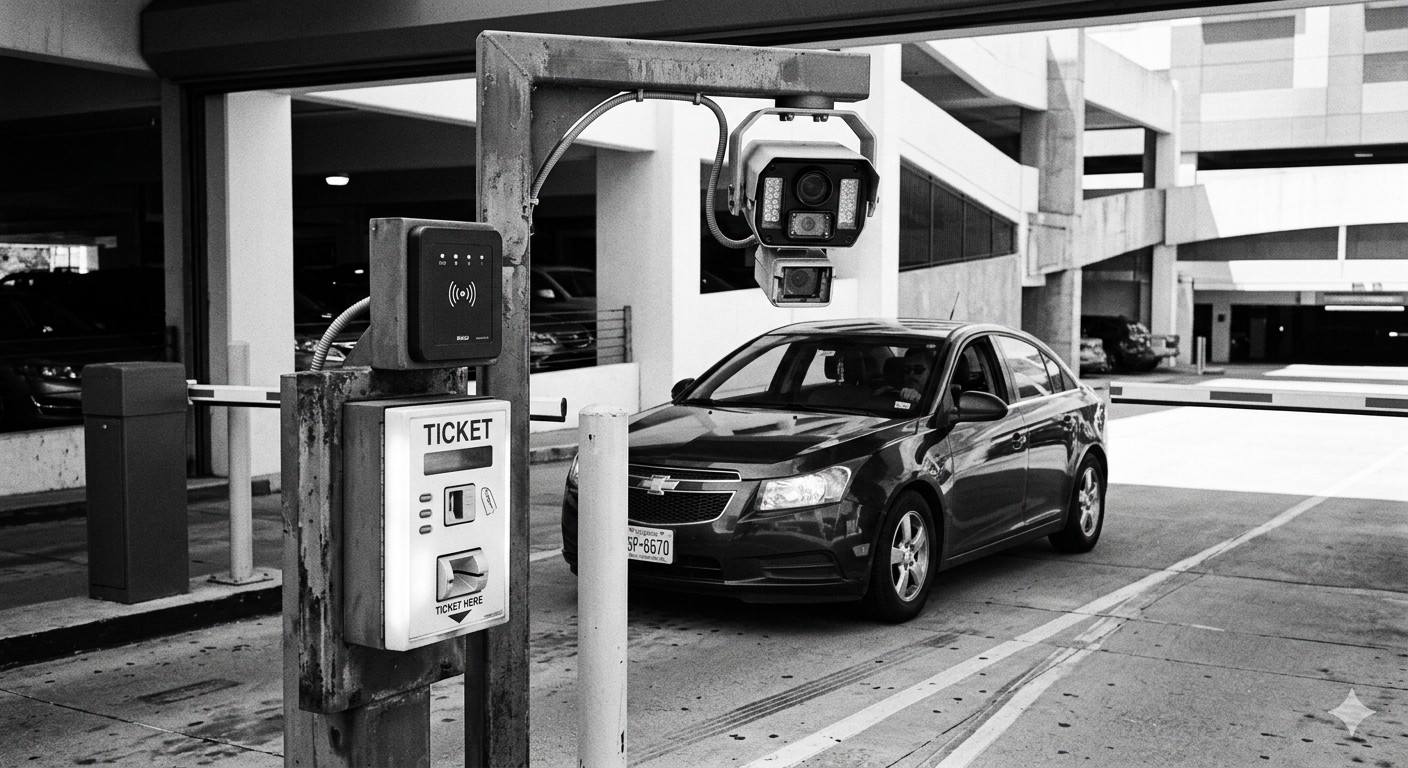
If you are planning a system with LPR cameras, RFID readers, or ticket dispensers, verify that the gate controller supports the protocol your devices use. For a deeper look at how these technologies work together, see our explanation of how automatic car park barriers operate.
Installation Considerations
Site Assessment
Before ordering, conduct a site assessment that covers:
- Lane width — Determines arm length and gate model
- Traffic volume — Determines duty cycle requirements
- Power availability — Confirm voltage and proximity of electrical supply
- Foundation — Most gates need a concrete pad or island; check soil and drainage
- Safety clearances — Pedestrian paths, ADA compliance, fire lane access
- Environmental factors — Wind load, temperature extremes, salt air exposure
Professional Installation vs. DIY
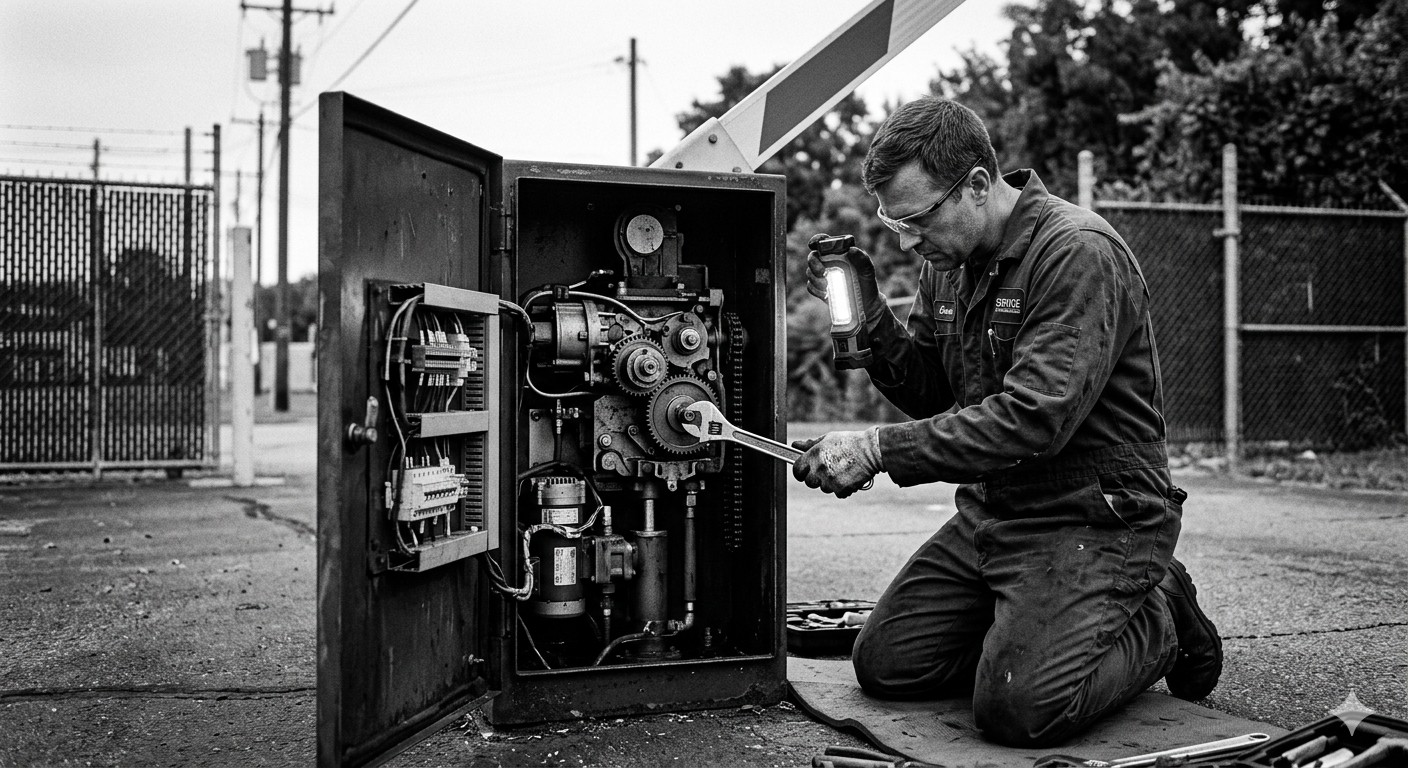
Commercial barrier gates should be installed by qualified technicians. Improper installation voids warranties, creates safety hazards, and often violates local building codes. Most manufacturers maintain authorized dealer and installer networks.
Warranty and Service
Warranty terms vary significantly across manufacturers and even across product lines within a single brand.
| Warranty Component | Typical Coverage |
|---|---|
| Gate mechanism / housing | 2 to 5 years |
| Motor | 2 to 3 years |
| Electronics / controller | 1 to 2 years |
| Arm | Often excluded or limited |
| Labor | 1 year (if included) |
Ask about:
- Parts availability — Can you get replacement boards and motors within days, or weeks?
- Local service network — Is there an authorized service provider within reasonable distance?
- Extended warranty options — Some manufacturers and dealers offer multi-year service contracts.
- Mean time between failures (MTBF) — Published MTBF data helps you forecast maintenance costs.
The International Parking & Mobility Institute (IPMI) publishes resources on parking technology procurement that can help you benchmark warranty expectations across vendors.
Budgeting: What to Expect
Barrier gate pricing depends on the model tier, arm length, features, and installation complexity. For a detailed cost analysis, see our barrier gate pricing breakdown.
As a rough guide:
- Entry-level commercial gate: $2,000 – $4,000 (gate unit only)
- Mid-range commercial gate: $4,000 – $8,000
- High-speed or heavy-duty gate: $8,000 – $15,000+
- Installation: $1,500 – $5,000+ depending on site conditions
- Annual maintenance: $300 – $1,200 per gate
These are gate-only figures. A complete access control lane — including readers, loop detectors, signage, and installation — typically runs $10,000 to $30,000 per lane.
Common Mistakes to Avoid
- Under-specifying duty cycle. The number one failure mode is buying a light-duty gate for a high-traffic application. It burns out the motor within months.
- Ignoring arm replacement costs. Arms break. Budget for replacements and confirm they are readily available for your model.
- Skipping the site assessment. Drainage issues, insufficient power, or wrong arm length can turn a straightforward install into an expensive retrofit.
- Choosing on price alone. A gate that costs 30% less but fails twice as often is not a bargain. Total cost of ownership matters.
- Forgetting about future integration. Even if you only need basic access control today, choose a gate with communication options that let you add LPR, mobile access, or revenue control later.
Key Takeaways
- Match the gate to your traffic volume. Duty cycle and speed are more important than brand name.
- Get multiple quotes from authorized dealers of at least two or three manufacturers. Compare total installed cost, not just equipment price.
- Prioritize safety features. Anti-crush detection, breakaway arms, and UL 325 compliance are baseline requirements, not extras.
- Plan for integration. Your barrier gate is one component in a larger access control or revenue control system. Make sure the pieces fit together.
- Budget for the full lifecycle. Purchase price, installation, maintenance, parts, and eventual replacement all factor into the real cost of ownership.
A barrier gate system should last 10 to 15 years with proper maintenance. Investing the time upfront to select the right one pays dividends every day it operates without incident.