The question every facility manager and parking operator asks first is straightforward: how much does a barrier gate cost? The answer, unfortunately, is not a single number. A basic residential gate unit might run $1,500, while a fully installed commercial access lane with payment integration can exceed $30,000.
This pricing guide breaks down the real costs — equipment, installation, integration, and ongoing expenses — so you can build an accurate budget and avoid the sticker shock that catches first-time buyers off guard.
Equipment Cost by Tier
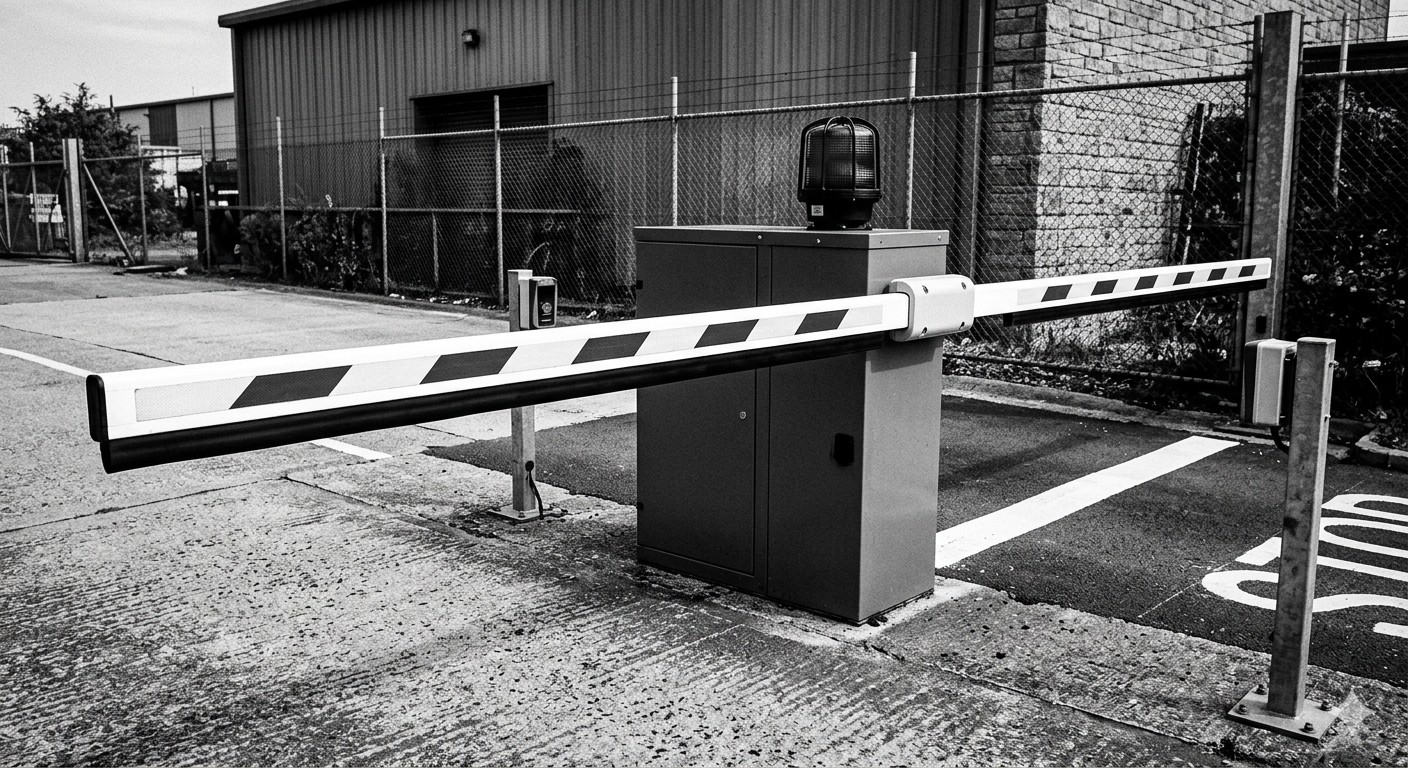
Barrier gate pricing varies by manufacturer, features, duty cycle, arm length, and technology. Here is what you can expect across three broad tiers.
| Tier | Gate Unit Price | Typical Arm Length | Duty Cycle | Typical Models |
|---|---|---|---|---|
| Entry-level | $1,500 – $3,500 | 3 – 4 m (10 – 13 ft) | 50% – 70% | CAME G3000, BFT Michelangelo |
| Mid-range commercial | $3,500 – $8,000 | 3 – 6 m (10 – 20 ft) | 80% – 100% | FAAC B680H, Parking BOXX BG Series, CAME G6000 |
| High-speed / heavy-duty | $8,000 – $18,000 | 4 – 8 m (13 – 26 ft) | 100% (continuous) | Magnetic Autocontrol MIB, Nice/Hi-Speed M-Bar |
These are equipment-only prices — the gate mechanism, housing, arm, and controller board. They do not include installation, access control peripherals, or integration.
What Drives the Price Difference?
The price gap between a $2,000 gate and a $12,000 gate comes down to a handful of engineering factors:
- Motor and mechanism quality. Higher-tier gates use brushless DC motors, precision gearing, and hydraulic systems that last longer and cycle faster.
- Duty cycle rating. A 100% continuous duty cycle gate is engineered for constant operation. The motor, bearings, and control electronics are all upgraded.
- Arm length capability. Longer arms require stronger motors and counter-balance systems. A gate rated for a 6-meter arm costs significantly more than one rated for 3 meters.
- Safety and sensing. Premium gates include integrated obstacle detection, encoder-based position sensing, and more sophisticated control logic.
- Build materials. Powder-coated steel versus painted mild steel. Stainless steel hardware versus zinc-plated. These details affect longevity, especially outdoors.
Installation Costs
Installation is where budgets often go sideways. The gate unit itself is typically only 40% to 60% of the total project cost.
Installation Cost Components
| Component | Cost Range | Notes |
|---|---|---|
| Concrete pad / island | $500 – $2,500 | Required for most installations; includes forming, pouring, and curing |
| Electrical supply | $800 – $3,000 | Running conduit and wire from the nearest panel; trenching if needed |
| Loop detector installation | $300 – $800 per loop | Cut saw loops into pavement plus detector modules |
| Gate mounting and commissioning | $1,000 – $2,500 | Mechanical installation, wiring, alignment, and testing |
| Bollards or curbing | $500 – $2,000 | Protecting the gate housing from vehicle impact |
| Signage and striping | $300 – $1,000 | Lane markings, height clearance signs, directional signage |
| Permit fees | $0 – $1,500 | Varies by municipality; some require electrical and building permits |
Total Installed Cost Per Lane
Combining equipment and installation, here is what a single access lane typically costs:
| Configuration | Total Installed Cost |
|---|---|
| Basic entry lane (gate + loop detector + manual release) | $4,000 – $8,000 |
| Standard commercial lane (gate + card reader + loop detectors + intercom) | $8,000 – $18,000 |
| Full revenue control lane (gate + ticket dispenser or LPR + pay station integration + networking) | $18,000 – $35,000 |
| High-speed lane (high-speed gate + full integration + redundant safety systems) | $25,000 – $50,000+ |
For multi-lane installations, there are modest economies of scale — shared electrical runs, one mobilization fee, bulk equipment pricing — but each lane still requires its own gate, loops, and peripherals.
Ongoing Costs
The purchase price is a one-time expense. Ongoing costs accumulate over the gate’s 10- to 15-year lifespan and should factor into your budgeting.
Maintenance
| Maintenance Item | Frequency | Cost |
|---|---|---|
| Preventive maintenance visit | Semi-annual or quarterly | $150 – $400 per visit |
| Arm replacement | As needed (impacts, wear) | $50 – $300 per arm |
| Motor replacement | Every 5 – 10 years (varies) | $300 – $1,500 |
| Control board replacement | As needed | $200 – $800 |
| Spring and mechanical parts | Every 3 – 7 years | $100 – $500 |
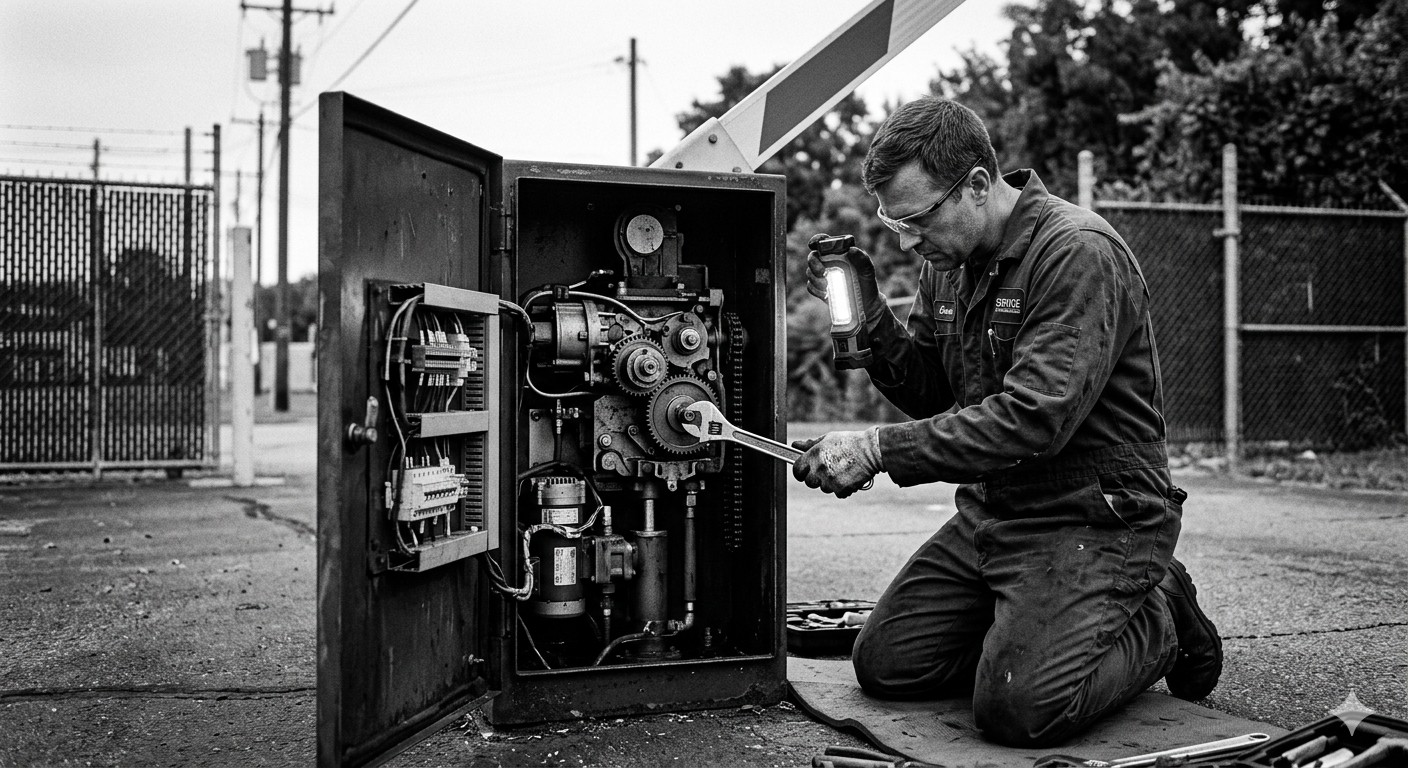
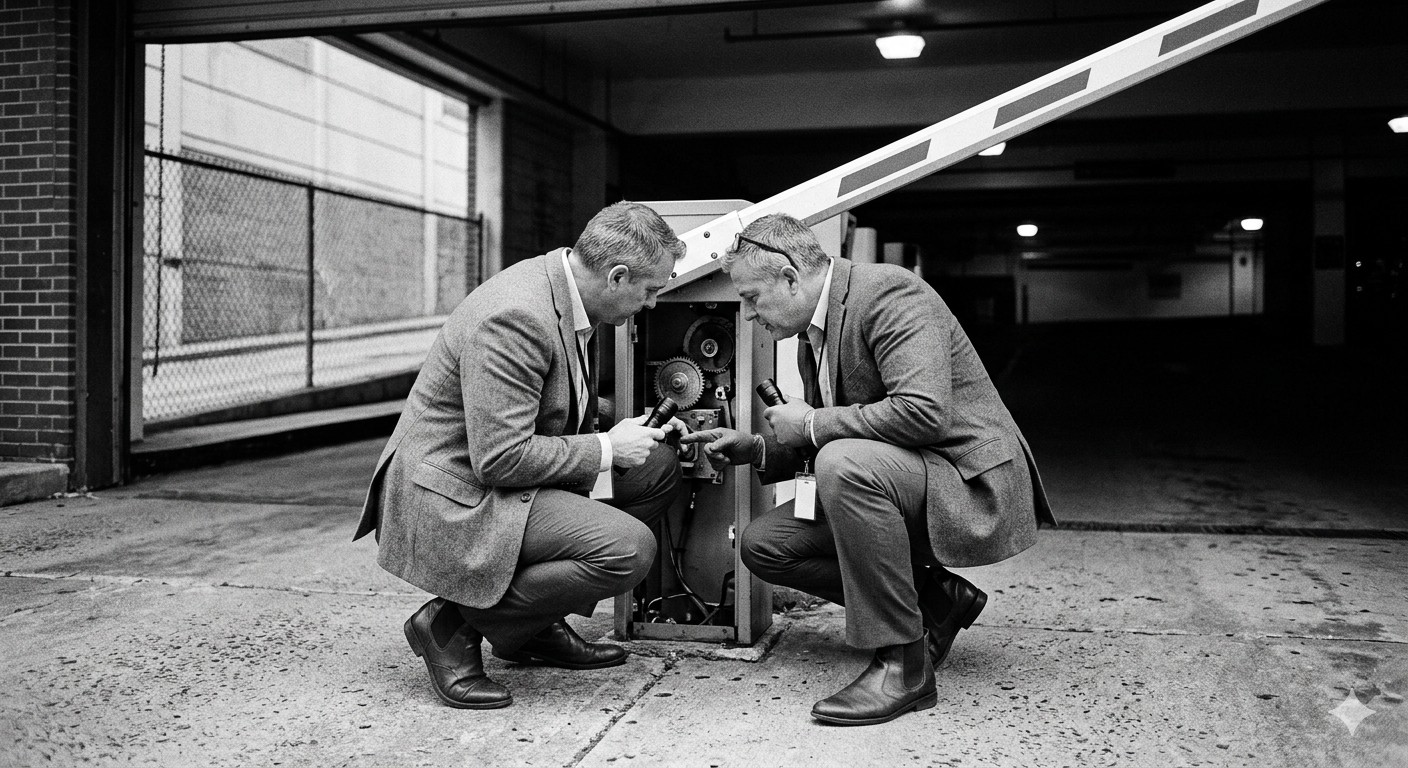
| Emergency / breakdown service | Unplanned | $150 – $500 per call |
A well-maintained commercial barrier gate typically costs $500 to $1,500 per year in maintenance. Neglected gates cost more — deferred maintenance compounds, and emergency calls carry premium rates.
Service Contracts
Many dealers and manufacturers offer annual service contracts that bundle preventive maintenance and priority emergency response. These typically run $600 to $2,000 per gate per year, depending on the scope. For facilities with multiple gates, service contracts often make financial sense by locking in predictable costs and faster response times.
Software and Connectivity
If your barrier gate is part of a networked parking management system, there may be recurring software or cloud service fees:
- Parking management software: $50 – $500/month depending on features and scale
- LPR camera subscriptions: $50 – $200/month per camera (if cloud-processed)
- Cellular connectivity (if no hardwired network): $15 – $50/month per device
These costs apply to the system, not the gate itself, but they are part of the total picture.
Price Comparison Across Manufacturers
Pricing varies by region, dealer, and the specific quote you negotiate. These ranges reflect typical North American pricing from authorized dealers.
| Manufacturer | Entry Model | Mid-Range Model | Premium Model |
|---|---|---|---|
| CAME | $1,800 – $2,500 | $3,500 – $5,500 | $6,000 – $9,000 |
| FAAC | $2,000 – $3,000 | $4,000 – $6,500 | $7,000 – $12,000 |
| Magnetic Autocontrol | — | $5,000 – $8,000 | $10,000 – $18,000 |
| Nice/Hi-Speed | $2,000 – $3,000 | $4,500 – $7,000 | $9,000 – $15,000 |
| Parking BOXX | — | $3,500 – $6,000 | $6,000 – $10,000 |
| BFT | $1,500 – $2,200 | $3,000 – $5,000 | $5,500 – $8,000 |
Magnetic Autocontrol and Nice/Hi-Speed tend to occupy the higher end of the market, with a focus on airports, transit, and high-security applications. CAME and BFT cover a broader range from residential to commercial. FAAC and Parking BOXX are strong in the mid-range commercial segment.
Hidden Costs and Budget Traps
1. Site Preparation
If your installation site does not have a concrete pad, proper drainage, or adequate electrical supply, site prep can add $2,000 to $10,000+ before you even order the gate. Get a site assessment before you finalize your budget.
2. Spare Parts Inventory
Keeping a spare arm, fuse kit, and control board on hand prevents extended downtime when something breaks. Budget $300 to $800 for initial spare parts.
3. Training
Your facility staff need to know how to operate the manual release, reset alarms, and perform basic troubleshooting. Most dealers include basic training in the installation price, but formal training programs for larger operations may cost extra.
4. Network Infrastructure
If you are deploying a networked system, you may need to run Ethernet to each gate location or install wireless bridges. This is often overlooked in initial budgets.
5. Compliance and Permitting
Some jurisdictions require permits for barrier gate installations, especially if they affect fire lane access or public right-of-way. Compliance with UL 325 safety standards for gate operators is also a consideration — non-compliant installations may create liability exposure.
How to Get Accurate Quotes
- Write a specification. Define arm length, duty cycle, speed, safety features, access control integration, and environmental requirements before contacting dealers. Our complete buyer’s guide can help you build this spec.
- Get at least three quotes. Contact authorized dealers for two or three different manufacturers. Apples-to-apples comparisons require that all quotes include the same scope.
- Request itemized pricing. A lump-sum quote hides where the money goes. Ask for equipment, installation, and integration broken out separately.
- Ask about total cost of ownership. Request maintenance cost estimates for years 1 through 5. A gate that costs less upfront but more to maintain is not necessarily cheaper.
- Verify warranty terms. Longer warranties reduce your risk exposure. See what is covered and what is excluded.
The IPMI publishes procurement guidance for parking technology that can help standardize your RFP process. RSMeans construction cost data also includes parking equipment installation benchmarks that are useful for validating quotes.
ROI Considerations
A barrier gate is not just a cost — it generates or protects revenue. Common ROI drivers include:
- Revenue recovery: A gated lot that previously relied on the honor system or passive signage typically recovers 20% to 40% more revenue after installing access control. For a lot generating $50,000/year, that is $10,000 to $20,000 annually.
- Reduced unauthorized parking: Removing non-paying parkers frees spaces for paying customers or intended users.
- Labor savings: Automated gates reduce or eliminate the need for attendant staffing at entry and exit points.
- Insurance benefits: Some insurers offer reduced premiums for facilities with controlled access.
For a detailed analysis of payback periods, see our article on barrier gate ROI and payback periods.
Budgeting Template
Use this template to build a complete project budget:
| Line Item | Your Estimate |
|---|---|
| Gate unit(s) — quantity x unit price | $ ________ |
| Arms (primary + spare) | $ ________ |
| Access control peripherals (readers, dispensers, LPR) | $ ________ |
| Loop detectors (quantity x price per loop) | $ ________ |
| Concrete pad / island work | $ ________ |
| Electrical supply and conduit | $ ________ |
| Installation labor | $ ________ |
| Networking / cabling | $ ________ |
| Signage and striping | $ ________ |
| Permits and fees | $ ________ |
| Commissioning and testing | $ ________ |
| Training | $ ________ |
| Spare parts inventory | $ ________ |
| Contingency (10-15%) | $ ________ |
| Total Project Budget | $ ________ |
Bottom Line
A single commercial barrier gate lane — equipment, installation, and basic access control — typically costs $8,000 to $18,000. High-speed or revenue control lanes run $20,000 to $50,000+. Annual maintenance adds $500 to $1,500 per gate.
The total investment is significant, but the math usually works in your favor. Even modest revenue recovery or labor savings can pay back the investment within one to three years. The key is building a realistic budget that accounts for all costs — not just the equipment price — and selecting a gate rated for your actual operating conditions.