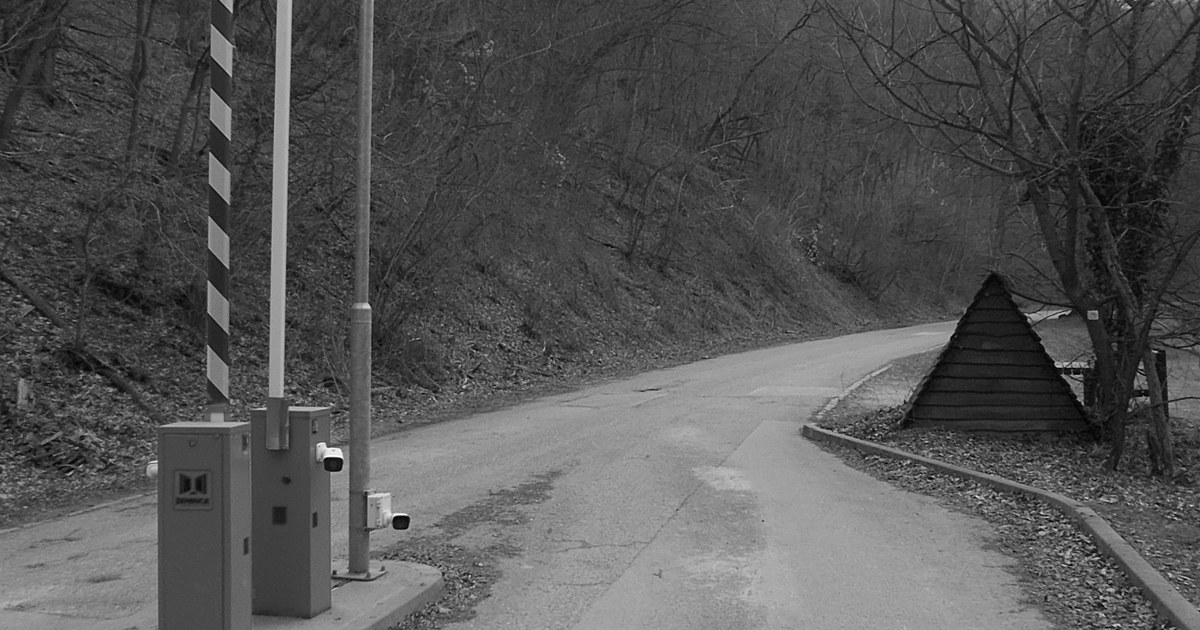
The case for replacing ticket dispensers with license plate recognition cameras at barrier gate lanes is straightforward on paper: no ticket stock, no printer jams, no credential to lose, a faster entry cycle for returning users, and a gate arm that can open based on a read rather than a button press. In practice, the transition involves architectural decisions about system integration, read accuracy thresholds, fallback workflows, and what happens in the roughly 1–5% of reads that do not resolve cleanly.
Facilities that have made the switch successfully share a common trait: they treated the transition as an integration project, not a hardware swap. Facilities that struggled treated it as the latter.
What Changes When Tickets Disappear
A conventional ticket-based PARCS flow is hardware-simple: a vehicle triggers a loop detector, the dispenser issues a ticket with a timestamped barcode, and the gate opens. On exit, the ticket — validated or paid — is inserted or scanned, and the gate opens. The intelligence lives in the ticket.
An LPR-integrated flow shifts the intelligence to the plate. On entry, a camera reads the plate, logs it with a timestamp, and sends a trigger to the gate controller — either directly via relay or through middleware software that bridges the LPR platform to the gate. On exit, the plate is read again, duration is calculated, payment is verified or collected, and the gate opens.
The gate arm itself does not change. What changes is the trigger logic: instead of a validated ticket producing a contact closure, it is now a matched plate and confirmed payment status producing that same closure. Legacy gate controllers that accept a dry-contact input can be LPR-integrated without replacement — the LPR middleware simply drives that same input.
Architecture: Native vs. Middleware Integration
Native integration
Higher-end PARCS platforms — HUB Parking, SKIDATA, SWARCO, T2 Systems — include LPR as a first-party feature or a published API integration with a short list of certified camera vendors. In native implementations, the LPR camera connects directly to the PARCS server, which manages plate database lookups, payment verification, and gate trigger commands in a single transaction.
Native integration gives the cleanest failure modes: the PARCS system knows the plate, knows the payment status, and knows the gate state, all in one place. Troubleshooting a failed open or a misread traces to a single system log.
Middleware integration
Sites running legacy or mid-tier PARCS that do not natively support LPR use middleware to bridge the two systems. The LPR camera sends reads to a middleware server, which translates them into whatever format the PARCS accepts — Wiegand, RS-232, RESTful API, database write — and that signal drives the gate. Current PARCS systems can accept third-party LPR data via Wiegand protocols or RESTful APIs.
Middleware adds an integration point and a potential failure mode: if the middleware service stops, the LPR-to-gate path breaks even if both the camera and the gate controller are functioning. Redundancy requirements and failover procedures need to be designed in, not bolted on later.
Latency and Throughput
The physical gate cycle — arm up, vehicle clears, arm down — takes roughly 3–5 seconds in a typical installation. For LPR to work without a noticeable wait, the read-to-trigger cycle needs to complete within that window. Modern AI-enabled LPR cameras handle the full recognition-and-decision path in under 4 seconds for gated applications; free-flow systems can operate in under 1 second.
At typical parking entry speeds (5–10 mph approach to the gate), a well-positioned camera with adequate image resolution reads the plate before the vehicle reaches the gate nose. For high-throughput facilities — hospitals, stadiums, airport economy lots — this matters. A camera that takes 3 seconds from trigger to read confirmation will create queue at 30 vehicles per hour. At 30+ vehicles per minute (event egress), it causes operational collapse.
The relevant specification to request from any LPR vendor is end-to-end processing time under load, tested at the vehicle speeds and lane angles of your specific installation.
Accuracy and the Fallback Workflow
Read accuracy under favorable conditions runs 95–99% with current camera and AI recognition technology. Milesight, Genetec, Genetec’s AutoVu, and similar platforms regularly achieve 97–98% on clean plates in adequate lighting with proper camera placement. That number degrades with damaged plates, custom fonts, snow/mud obscuring characters, and extreme backlighting.
The 1–5% of reads that do not resolve cleanly are not optional to ignore. At 500 daily transactions, even a 98% accuracy rate produces 10 events per day requiring intervention. Those 10 events need a fallback: an intercom button, a call center connection, a backup credential method (QR code, RFID card), or an attendant. The intercom-to-gate workflow and the SLA for resolving a stuck-in-lane vehicle should be documented before the first camera goes live.
Facilities without a clear fallback plan consistently find that the first weeks post-transition involve longer average dwell times at entry lanes than the ticket system they replaced — until the fallback procedures are stabilized.
When the Switch Makes Operational Sense
High case: right for LPR
Permit-heavy facilities — universities, corporate campuses, hospitals with reserved sections — have the most to gain. Permit holders’ plates are pre-registered. Entry is a match against a known list. The gate opens automatically without any payment transaction at the gate. University of Michigan is upgrading all gates to LPR-based access between Fall 2025 and Fall 2026 specifically because permit holders represent the majority of entries and the match rate on pre-registered plates is consistently high.
Facilities where ticket hardware is a maintenance burden. Ticket dispensers have print heads, rollers, paper paths, and jam-prone mechanisms. Facilities reporting frequent dispenser maintenance calls often find that the LPR transition pays back in reduced service calls alone, before any staffing change.
Sites with pay-before-exit or app-pay workflows. If most customers are paying via mobile app or pay-on-foot stations before reaching the exit gate, the gate is already receiving a payment-confirmed trigger from the back-end system. Adding LPR plate confirmation to that trigger is a natural extension.
Low case: timing is wrong or requires more preparation
Very high transient-user facilities with no pre-registration path. Airport short-term parking, street-level event parking, or any facility where virtually all customers are one-time visitors with no pre-registered plate — the LPR system functions only as a time-stamp capture, with full payment required on exit. These facilities gain the most from the ticket elimination and consumables savings but rely heavily on exit read accuracy and fallback procedures.
Facilities with poor lane geometry for camera placement. LPR cameras need a clear sightline to the rear license plate (or front, depending on region) at a consistent angle. Tight turns, grade changes before the gate, or lanes where vehicles approach from multiple angles will degrade read accuracy before any configuration addresses it. A site survey with the camera vendor before procurement is not optional — it is the single most important step in ensuring the system works as sold.
Sites running end-of-life PARCS with no integration path. If the PARCS controlling your gates is no longer supported by its manufacturer and has no API or Wiegand integration capability, the LPR camera has no reliable path to trigger the gate. A PARCS upgrade may be a prerequisite, and the combined project cost changes the ROI math significantly.
What to Evaluate Before Committing
A checklist for facilities actively evaluating the transition:
- Site survey with camera vendor to confirm lane geometry supports accurate reads at your approach speed and lighting conditions
- PARCS integration path documented — native or middleware, and which specific firmware/API version the camera vendor has tested against your PARCS version
- Fallback workflow designed — intercom, call center SLA, backup credential method, and who responds to lane blockage outside business hours
- Plate pre-registration plan for permit or frequent-user populations (the accuracy and speed benefits compound when plates are known in advance)
- Pilot lane scope — running LPR on one lane while retaining ticket capability on another for a defined period gives real throughput data before full commitment
The transition from tickets to cameras is reversible in theory — ticket hardware can be reinstalled — but in practice the operational commitment and training investment make reversals expensive. Getting the site survey, integration verification, and fallback design right before going live is worth the time.
Hero image: “Apátkúti-Bach-Tal, Schranke mit Kameras, 2025 Visegrád” by Globetrotter19, CC BY-SA 4.0, via Wikimedia Commons (https://commons.wikimedia.org/wiki/File:Ap%C3%A1tk%C3%BAti-Bach-Tal,_Schranke_mit_Kameras,_2025_Visegr%C3%A1d.jpg).
)