
The spring and summer installation window is peak season for barrier gate projects. Q1 evaluators become Q2 decision-makers, and the construction industry books up quickly. Contractors who are available in April start getting selective about June starts by May. Equipment lead times — which were running 8–14 weeks for commercial-grade barrier gate systems in recent years — can extend further when the industry is at peak demand.
The operators who move through this window successfully are the ones who complete a pre-contractor site assessment in March or April, resolve the issues it surfaces, and have a project package ready when they engage a contractor. Those who skip the assessment find themselves mid-project, mid-summer, dealing with surprises that the assessment would have surfaced in a week.
This guide focuses specifically on what changes for a site assessment in the spring/summer context — the conditions created by winter, the timing constraints of warm-weather construction, and the site conditions that matter most when a project is scheduled for June through September.
The foundational site assessment checklist — traffic flow, lane geometry, utilities, ADA, and documentation — is covered in the general barrier gate installation site assessment guide. This guide builds on that foundation with the seasonal-specific layer.
1. Post-Winter Site Conditions
Winter leaves damage that is not always visible until spring. A site walk in March or April will surface concrete and drainage conditions that will affect your installation timeline and cost.
Frost heave and concrete damage. In freeze-thaw climates, concrete aprons, gate island pads, and curbing can heave, crack, or spall over winter. A barrier gate installed on a compromised concrete base will have alignment problems within months — the gate cabinet shifts, the arm geometry goes out of spec, and the safety loops embedded in the slab lose calibration. Walk the specific footprints where the gate cabinet and pedestrian hardware will be installed and assess concrete integrity before the project is priced.
Expansion joint condition. Expansion joints that have degraded allow water infiltration and accelerated freeze-thaw damage to the pads they protect. If the gate cabinet sits within 18 inches of a damaged expansion joint, address the joint before installation, not after.
Drainage condition. Spring assessment is the right time to evaluate whether the gate island area drains effectively. Standing water from snowmelt or spring rain will tell you what a summer thunderstorm will do. Gate cabinets in low-lying positions relative to the pavement surface will flood in heavy precipitation if the drainage isn’t adequate. Resolving drainage before installation — often a relatively low-cost civil fix — avoids expensive gate cabinet damage down the road.
Tree and vegetation overhang. Spring is when you can see what winter pruning left behind — and anticipate what summer growth will produce. Boom arm clearance needs to account for leaf canopy at full summer growth, not winter bare-branch conditions. Map any tree overhang within the boom arm arc and determine whether pruning is needed before installation.
2. Concrete and Civil Work Timing
A significant proportion of barrier gate installations require concrete work: gate cabinet pads, island curbing, loop detector cuts, conduit trenches, and sometimes approach apron repairs. Concrete work has temperature constraints that interact directly with summer scheduling.
Concrete placement temperature range. ACI 305R (Hot Weather Concreting) flags elevated risk in hot-weather conditions — high ambient temperatures (often cited around 90°F), high concrete temperature, low humidity, and wind — that accelerate water evaporation, reduce strength, and increase cracking risk unless special precautions are taken. In markets where summer temperatures regularly exceed this threshold, early-summer concrete work (June) is lower risk than mid-summer (July–August). If your project involves substantial concrete work and you’re in a hot climate, completing civil elements in May or early June is preferable to scheduling them in August.
Loop detector cuts. Vehicle detection loops are cut into existing pavement with a diamond blade saw and require pavement that is structurally sound and at a temperature suitable for the loop sealant. Most loop sealants have an application temperature window of 40–90°F ambient. Hot pavement surface temperatures (which can exceed 140°F in direct summer sun) can prevent proper adhesion of the sealant, leading to premature loop failure. Loop cuts for summer installs should either be completed in the cooler parts of the day or deferred to fall if pavement temperatures are extreme.
Permit timing. Building, electrical, and civil permits often run 4–8 weeks in busy permit offices. If your installation target is July 1, you need permits submitted by late April. Municipalities with backlogs during spring construction season sometimes run longer. Treat permit timeline as a long-lead item and submit early.
3. Electrical Capacity and Summer Load
Summer air conditioning load is the highest electrical demand period for most commercial buildings. Before a barrier gate electrical rough-in adds to that load, verify that the panel serving the installation location has adequate capacity.
Panel capacity check. A commercial barrier gate system with a loop detector, intercom, and RFID reader typically draws 5–15 amps at 120V or 208/240V, depending on the motor and controller. That load is continuous while the gate is operational. In a panel already running near capacity during summer peak cooling load, a barrier gate addition may require a panel upgrade or dedicated circuit run from a separate panel. Identify this before the electrical contractor mobilizes — a mid-project panel upgrade adds 2–4 weeks and significant cost.
Underground conduit condition. If the project reuses existing conduit runs (common in retrofits), pull a conduit brush through before pulling new wire. Winter ground movement and summer thermal expansion can collapse or displace conduit that was installed for a different system years ago. Discovering collapsed conduit after a contractor has started the pull adds a day of excavation to a project that was supposed to take an afternoon.
Generator or UPS consideration. For facilities that experience summer power outages from storm activity, the site assessment is the right moment to evaluate whether the barrier gate circuit should be on a generator or UPS circuit. Gate systems that fail open on power loss are a security issue; systems that fail closed during a storm create a congestion problem. The fail-safe/fail-secure decision is an access control question, but the power backup infrastructure is a civil and electrical one that should be resolved before installation.
4. Equipment Lead Times and Summer Demand
Spring and summer are peak production and shipping periods for commercial barrier gate equipment. Lead times that run 8–10 weeks during winter can extend to 12–16 weeks during peak season for some manufacturers.
Order equipment before finalizing contractor schedule. The practical implication: equipment orders should be placed — or at minimum, lead times should be confirmed — before locking a contractor mobilization date. A project that is ready to start in June but waiting on equipment arriving in August loses the contractor availability window and creates contractual complications.
Clarify shipping and staging. Barrier gate equipment (gate cabinets, arm assemblies, controllers, access terminals) is typically shipped on pallets. Verify that the site has a staging area accessible to a delivery truck, and that someone will be available for delivery receipt. Summer construction sites with multiple trades working can create staging conflicts if not coordinated in advance.
Identify long-lead items specifically. In a multi-component installation — gate cabinet, loop detectors, intercom, RFID/LPR system, signage, and payment integration — the longest lead item sets the mobilization date for the project. Identify which component has the longest lead and order it first, even if other components are still being specified.
5. Contractor Availability and Scope Definition
Summer contractor capacity in construction markets is constrained. Qualified gate installation contractors — who hold both low-voltage and electrical licenses and have barrier gate-specific experience — are a limited pool in most regional markets. The contractors with the most experience book earliest.
Define scope before soliciting bids. A vague scope (“install a barrier gate at our parking entrance”) produces bids that are not comparable and a selection process that goes sideways when scope details emerge post-award. Before engaging contractors, define: number of lanes, credential types (RFID, LPR, ticket, intercom), integration requirements (payment system, building access system, camera system), concrete and civil work included vs. separate, and any specific manufacturer preferences.
Verify license and insurance. Barrier gate installation involves low-voltage access control work and line-voltage electrical connections. In most jurisdictions, both require licensed contractors. Verify that your contractor holds the applicable licenses for your state and carries contractor’s general liability insurance with adequate limits. The International Parking & Mobility Institute maintains contractor resources and vendor directories useful for vetting installation partners.
Plan for a pre-mobilization walkthrough. Even if the contractor has done a preliminary site visit for bidding, schedule a formal pre-mobilization walkthrough — typically 1–2 weeks before the mobilization date — where the full installation crew reviews the site, confirms staging and logistics, and identifies any last-minute site changes. Summer construction environments change quickly, and a fresh walkthrough before work starts prevents surprises on day one.
6. ADA and Code Compliance Review
Spring/summer installations are often timed to align with planned facility improvements — repaving, landscaping, access control upgrades — and this creates an opportunity to address ADA compliance requirements that are triggered by the scope of work.
ADA Standards for Accessible Design require that access control elements — intercom call buttons, card readers, ticket dispensers, and payment devices — meet reach range requirements and clear floor space requirements. When barrier gate equipment is replaced or added in an existing facility, the work may trigger an obligation to bring the accessible route and ADA-regulated elements into compliance.
The practical implication for site assessment: walk the accessible route from the accessible parking spaces to the gate controls and identify any elements that would not meet current ADA standards. Include ADA-compliant equipment specifications in the initial scope rather than discovering the requirement mid-project.
Frequently Asked Questions
When is the best time to complete a site assessment for a spring/summer installation?
March or April. That window gives adequate lead time for equipment orders (12–16 weeks on commercial-grade systems during peak demand), permits (4–8 weeks), civil work, and contractor scheduling before summer is fully booked.
What post-winter conditions should I check before a spring site assessment?
Focus on concrete integrity at gate cabinet and island footprints (frost heave, cracking), expansion joint condition, drainage patterns using current snowmelt/rain, and tree canopy that may interfere with boom arm clearance at full summer growth.
Do barrier gate projects require building permits?
Typically yes. Most jurisdictions require a building permit for structural work (concrete pads, island curbing) and an electrical permit for the gate circuit. Some jurisdictions require a separate low-voltage permit for access control wiring. Submit permit applications as early as possible — spring permit offices are often backlogged.
How far in advance should I order barrier gate equipment for a summer installation?
Confirm lead times with your specified manufacturers before locking a contractor mobilization date. Lead times for commercial-grade barrier gate systems can run 12–16 weeks during peak season. Order the longest-lead component first.
What electrical issues should I check before a summer installation?
Verify available panel capacity, accounting for summer peak cooling load on the building. Check existing conduit condition if reusing runs. Determine whether the gate circuit should be on a generator or UPS circuit for storm-season power outage resilience.
Does replacing a barrier gate trigger ADA compliance requirements?
Potentially. When access control elements are replaced or added, ADA requirements for reach range and clear floor space at equipment may be triggered. Review ADA Standards for Accessible Design for the applicable elements and confirm compliance scope with your contractor before finalizing specifications.
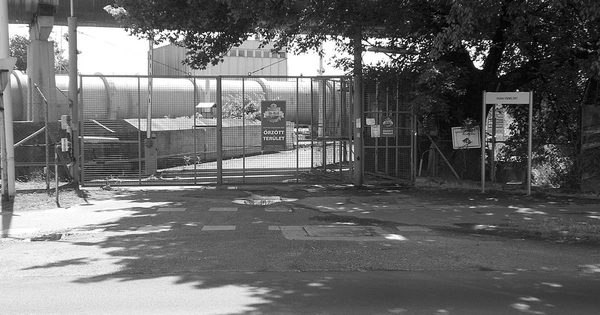
Hero image: “Ady Platz 10, Tiefgarage, 2023 Szeged” by Globetrotter19, CC BY-SA 4.0, via Wikimedia Commons (https://commons.wikimedia.org/wiki/File:Ady_Platz_10,_Tiefgarage,_2023_Szeged.jpg).

)