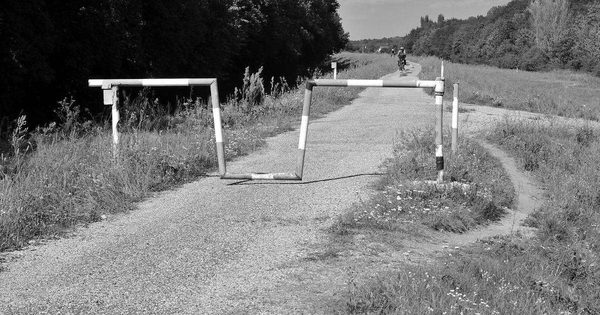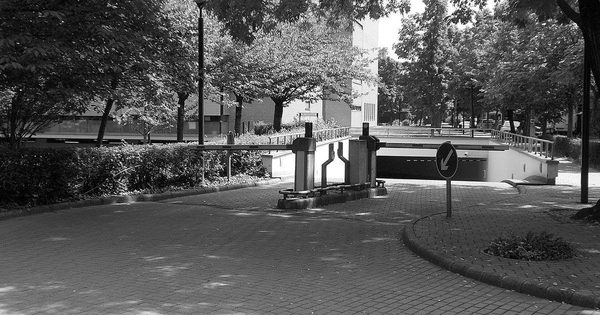
A barrier gate housing in Minneapolis, Buffalo, Winnipeg, or Sarnia is not doing the same job as the same housing in Phoenix. The mechanical duty cycle is identical. The environmental duty cycle is not, and it is the environmental one that determines whether the enclosure is still serviceable in year twelve or has been replaced twice.
The specification decision usually comes down to a coated carbon steel housing against a stainless one, with a meaningful price gap between them. The gap is real and so is the difference in service life, but the reasoning most often given for it — “stainless doesn’t rust” — is imprecise enough to lead buyers to the wrong conclusion in both directions. Some northern sites are paying for stainless they do not need. Others are specifying coated carbon steel into an environment that will destroy it, on the assumption that a good coating is a good coating.
What Actually Attacks the Housing
Three mechanisms operate at a northern gate location, and they are not equally addressed by the same material choice.
Chloride exposure is the dominant one. Road salt and brine applied to the approach lane arrives at the housing continuously through the winter — as spray from vehicles, as slush thrown by tires, and as a residue that dries onto the lower housing and stays there. Chloride is specifically aggressive toward the passive oxide layer that gives stainless its corrosion resistance, which is why the material grade matters enormously and why “stainless” as an unqualified word on a spec sheet is close to meaningless.
Freeze-thaw cycling is the mechanism most often described loosely and most often underestimated. The damage is not that the metal gets cold. It is that moisture penetrates a small defect — a coating chip, a weld pinhole, a fastener seat, a seam — and then expands on freezing, widening the defect. Each cycle enlarges the path slightly. A northern site can run well over a hundred of these cycles in a season, concentrated in the shoulder months when the temperature crosses zero daily. This is the mechanism that turns a minor coating defect into a corrosion site, and it is why a coated housing’s performance depends far more on coating integrity than on coating quality.
Mechanical damage is the third and it feeds the first two. A housing at a lane entrance gets hit — by mirrors, by snow-clearing equipment, by plows, by drivers misjudging the approach. Every impact that breaks the coating creates exactly the defect that freeze-thaw exploits. Northern sites also get salt-laden snow piled against the housing base by clearing operations, which puts the most vulnerable part of the enclosure in prolonged direct contact with the most aggressive agent on site.
The Real Difference Between the Two Options
Coated carbon steel — hot-dip galvanized, powder coated, or both — provides protection through a barrier. Modern powder coating chemistries are engineered for exactly these conditions, including UV load, coastal salt air, and northern freeze-thaw cycling, and a well-applied system genuinely extends service life by a large multiple over bare or painted steel. The barrier approach has one structural property that governs everything: it works completely until it is breached, and then it stops working at the breach.
Stainless provides protection through the material itself. A scratch in a stainless housing re-passivates. A scratch in a coated carbon steel housing is an entry point. That single difference is the entire argument, and it maps directly onto the lane environment, because a lane-side enclosure is a component that will accumulate scratches, chips, and impacts over its life as a matter of routine rather than as a failure.
Stainless also holds up better in the cold in a second, less-discussed way: it is less prone to the low-temperature brittleness that affects some carbon steels, which matters for a housing that takes impacts at −25°C.
When Coated Carbon Steel Is the Right Call
Stainless is not automatically correct, and specifying it reflexively wastes budget that would do more good elsewhere on the same site.
Coated carbon steel is a defensible choice where the housing is genuinely protected from direct salt spray — set back from the traffic lane, behind a curb line that keeps slush off it, or under structure. It is defensible on a covered garage installation where the deicing exposure is tracked-in rather than sprayed. And it is defensible where the site has an actual maintenance program: the coated option’s weakness is unrepaired damage, so a site that inspects the housing each spring, touches up chips, and washes salt residue off at end of season gets much closer to stainless service life than the comparison implies.
That last point is the one most frequently ignored at specification time. A regular fresh-water wash to remove accumulated chloride is the single highest-value maintenance action at a northern gate location, and it improves the outcome for both materials. It is also the first thing cut when a facility’s maintenance budget tightens, which is a reason to be skeptical of a specification that depends on it.
Specifying It Properly
If the decision is stainless, specify the grade. The distinction between 304 and 316 is the addition of molybdenum in 316, which materially improves chloride resistance, and a heavy road-salt environment is precisely the case that distinction exists for. Specifying “stainless steel enclosure” without a grade invites a 304 substitution that will pit visibly within a few seasons at a salted lane.
Whichever material is chosen, the fastener and hardware specification has to match it. A stainless housing with plated carbon steel fasteners will show rust streaking from every fastener within a year and will suffer galvanic issues at the interfaces. Mixed-metal assemblies fail at the joins, and the join is where water sits.
Pay attention to the base detail. The housing sits on a concrete curb, and the interface between the base plate and that curb is where salt-laden meltwater pools and where snow gets piled. Drainage at the base, a sealed base plate interface, and anchor hardware in the same material family as the housing all matter more to service life than the material of the housing panels themselves.
Finally, specify access. A front-opening or otherwise field-serviceable housing gets inspected. A housing that requires the arm to be removed to open does not get inspected, and an uninspected enclosure in a chloride environment is one where the first sign of a corrosion problem is a functional failure.
The Practical Takeaway
The material premium for stainless at a northern, salted, exposed lane location is usually recovered, because the failure mode of the cheaper option is driven by accumulated physical damage that the site cannot prevent. At a sheltered or lightly salted location with a maintained inspection program, coated carbon steel remains a sound engineering choice and the money is better spent on the base detail, the fasteners, and the drainage.
The decision that is never right is specifying the cheaper housing and then not funding the maintenance that the cheaper housing depends on. That is not a cost saving; it is a deferred replacement with a corrosion problem attached.